

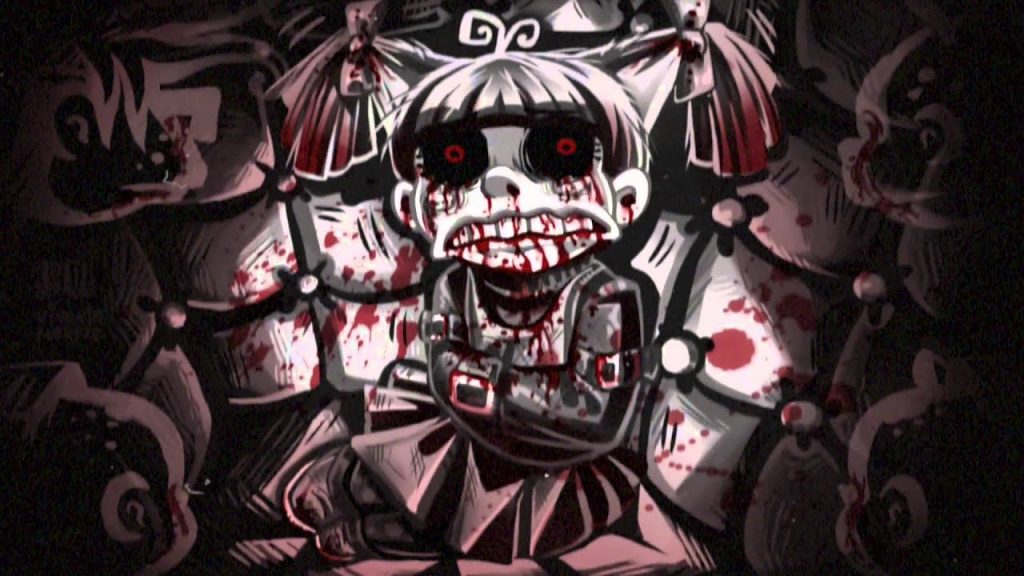
The Van Ness Asylum

June 6, 2013 at 12:00 AM
VN:F [1.9.22_1171]
Rate This Pasta
Rating: 7.9/10 (210 votes cast)

Being a devout fan of Creepypasta’s true story section, I felt compelled to share my story with other users. While it is nice to provide all of you with a chilling, and entertaining story, keep in mind I have a much greater goal in mind.

Before my experience two days ago (May 3rd and 4th, 2013) I was a very skeptical person; not just in the paranormal, but in all areas of life. Should something not be able to be factually proven, it was simply not true. While I was always interested in death, the paranormal, and ‘spooking’ myself in general, I had always been a hard-headed person who never believed that there was any truth to it all. I simply wrote things off as, “an interesting story” and never genuinely believed that in anything, “unexplained”. Following my experiences however, I’ve come to terms with the fact that just because things do not follow our illusion of reason, does not mean that those things aren’t actually valid.

As I had stated before, I have a greater goal in mind higher than simply entertaining my fellow Creepypasta members. Contrary to my previous belief, there are things in life that cannot be explained. Like the beginning of the universe, and life itself. We can trace things back in theory, 13.7 billion years ago with the Big Bang; but the further into it you go, the more questions arise. “And what before that, and before that?” Great wars have been fought over the topic ever since the beginning of man itself. We are all fighting and scrambling to answer the unexplainable origin of the beginning of the universe. Why? Simply put, we are very intrigued about a topic that is so complex, and abstract, that it could never be explained.

This is why the Creepypasta stories, true or false, are captivating. We all want to feed our hunger with a glimpse into the irrational world of the paranormal and incomprehensible. My goal above all is to show my peers that you must keep an open mind, and simply give into the inevitable truth that some things in life cannot be explained.

I apologize for the long prefix, but I felt it was an absolutely necessary one. Here are my experiences of May 3rd and 4th.

Seeing as how it was a Friday on May 3rd, I was very glad to be on a small but much appreciated break from work and school. Naturally, I did the old teenager cliché of spending the night at a friend’s house. As usual, I indulged in playing video games, and criticizing old classic movies with my good buddy, Cris. We were a couple of film buffs who loved share impressions of actors, and poke fun at poorly done special effects, etc. The night was honestly going great in true weekend fashion. My friend and I had just come to the realization that he could do a pretty good Nicolas Cage impression, so we spent a large part of that night laughing and talking like him at random points in our hangout.

When I had attempted to follow in and give the impression a try, he shot me down and ridiculed me for doing a bad job. I shrugged, and tried to laugh it off but he continued to pursuit berating me. Eventually, I grew tired of his negative criticism, and we had a small argument. It was no big shouting match or anything, we were used to this sort of thing because we made fun of each other on such a regular basis, it was only natural to have a small little fight now and then. We always got over it within a day or two. I felt the best course was to gather my things and ride my bike home so we could both cool off a little.

I was a little reluctant to bike home because it was really late already. I was no stranger to riding home in the dark, it was actually sort of routine because I got around a lot. It seemed I was always riding home in the late hours from someone’s house. This time was different however because it was now 1:24 AM (May 4th now). I had only ever ride my bike out past midnight only once or twice before for an absolute emergency. I refrained from riding when it was very late because I always had a fear of gangs and other not-so-great characters who tended to be out at that time of night.

Clouded of my better judgment by pride and anger though, I put on my backpack, hopped on my bike, and started off. I recall the cool summer breeze that I had felt as soon as I began to ride home. It was very therapeutic to feel the wind relieving me of my stresses. I was now confident that I had made the right call to leave my friend’s house, rather than stay there and wait in awkward silence until we both went to sleep. I continued to ride home for another ten minutes. At this point I was at a crossroads. Do I ride down Van Ness? Or turn, and head towards the main road, where the prostitutes and gangsters usually hung out?

I continued to go straight and head down Van Ness. Although this seemed like a no-brainer, it took some thinking, and a fair amount of guts. Van Ness was a very tranquil street. It was filled with tall pine trees, little traffic, and certainly no shady characters like Blackstone. It was the quintessential biking trail for the town during the day; a bikers paradise. At night however, it was much different. Van Ness was a bit off a historic part of town, so it did not have street lights. There were so many trees, that even the moonlight could not sneak through to illuminate the street. Me and my friends frequently joked that this was the darkest street in the world. Aside from being very dark it was also very quiet, even the sound of crickets would be relieving because you would know that you were not completely alone.

I had been riding on the street for a while now, and only had about three-quarters of a mile remaining until I was on my street. I had gotten kind of used to the street and was no longer nervous about the ‘spookiness’ of the street. The solitude was actually quite refreshing.

During the day, I frequently rode down Van Ness, as I had mentioned it was a ‘Mecca” for bike riders. I was very familiar with all of the buildings and fields on the stretch of road. So, when I saw an unfamiliar building, it stuck out like a sore thumb. At the end of a long, dry field stood a tall menacing, mansion of a home. Like straight out of a classic horror movie. I could totally imagine a thunderstorm in the background adding to the horrifying look of it. I stopped pedaling, and slowly passed the building by. The curiosity of the building began to burn a hole in my head. I knew that if I did not stop and analyze the building, I would lose sleep wondering at what I had missed.

I turned around and dismounted my bike, and stared at the building in awe. On the front of the building was a green text, the same green that was used on this historic part of town in Van Ness. I was nearsighted, which meant that I need to wear my prescription glasses to see far away. I reached in my pocket and realized that I had left my glasses at Cris’ house in my hurry. I decided that I would have to get a closer look if I wanted to read what it said. I was way too enthused to simply call it a night on that note. I had to at least read what it said.

I stepped onto the crunchy dry field and proceeded to walk towards the building. My imagination was running wild, thinking of what on earth this sign would read. My mind is drawing blanks now as to what I thought it could have said. Finally I got close enough to make out the words. “Van Ness Asylum” Under that what smaller subtext that I could not yet read. I did not know if I should continue to walk towards it, and run like hell out of there. Once again, I figured, I have to at least read it. I walked a little closer and read the smaller text,” 978 N. Van Ness”. I was so puzzled. I was so sure that had I seen this terrifying building before, I definitely would have looked inside of it, and at the very least remembered that it was there. It’s not very often you see an asylum you now.

Second, why would there be an asylum in the middle of all of these nice homes in the first place. All of the homes surrounding, and the asylum itself looked to be built around the same time period. The homeowners would have gone mad had they known a looney-bin was built right next door. The asylum was obviously abandoned as shown by the broken windows and poor upkeep. So at the very least, why wouldn’t the neighborhood have at least petitioned to have the building torn down in recent years?

None of this was adding up. I decided I should call someone and at least get their opinion. Should I go in? Then the grim reality reminded me that it was now about 2 AM. All of family and friends were asleep. Maybe not Cris, but he was mad at me. I contemplated going in, and paced back and forth at the idea.

My entire life, I had been kind of a play-it-safe type guy; afraid to branch out and try new things. In the past two years, I had tried to embrace the spontaneous life and tried to learn to say yes. I had to be absolutely nuts to go into an abandoned asylum on a dark street at two in the morning, by myself mind you. “But imagine what you’d find?” I recalled watching YouTube videos of people who would break into condemned asylums and see what they found. The idea fascinated me, but at the same time, I didn’t think I had it in me. “I couldn’t possibly, could I?”

Once again, clouded by my better judgment; this time by intense curiosity and the drive to take a chance and explore, I proceeded to look for an opening into the building. I circled the building and gave reasons like, “That hole is too small…” or “I’d rip my shirt there…” soon I realized I was making sorry excuses to delay the exploration. I psyched myself up, and crammed myself through broken window.

I saw no signs of graffiti, old soda cans, or cigarettes that would imply that anyone has been in here since it was boarded up and deserted. That scared me. If someone had been in here before, I would have at least known that they whatever dangers may be in here, someone had encountered before me. I had a very annoying habit of scaring myself when having a clear, non-timid mindset was very important. I had a flashlight that I attached to my bike that I used to navigate the dark, cold building. Because this was virgin ground since the boarding up, the inside of the asylum was very well preserved. The white, flawless tile flooring still looked very sterile.

Trust me when I say, neatness was much more scary than if the place was a wreck. It was very freaky. Papers were scattered about from when they were extracting files and sensitive patient information, but other than the papers, the place was pristine. Spotless, no mirrors broken, no cracked porcelain toilets, no piss and excrement all over the walls like you would expect.

Next, I focused on paying attention to where I was and where I was headed. Where were the patient’s bunks, where were the operating rooms, and where was the morgue? It seems I was in the admissions area, where you would be checked in and out. I walked down a narrow hallway and found a cluster of operating rooms. Complete with the anti-septic metal tables, stripped of all warm, comfortable sheets and pillows. I didn’t find any scalpels, or bone-saws. I presume they removed those for health concerns. I scavenged through drawers and found surgical tubing, respirator masks, and sterile gloves, still sealed in the boxes. It was so odd to see that aside from the scattered papers, and no chairs, or furnishings, the place still contained a lot of things necessary to keeping an operational medical facility.

I continued through the asylum and found that the pattern on the floor had changed, the tiles were a different color, almost like a yellow brown, and the tiles were smaller. I noticed that every few feet there were drains on the floor. I looked up and around and saw lockers where I assumed scrubs and other gear was stored. I put it all together, and made the conclusion that I was in the morgue. The drains had been strategically placed to allow for the draining of blood on the floor. A truly haunting thought.

My whole time in there, I heard a few creaks, and whatnot but just blamed them on my stepping, and the age of the building. I had been in there about six minutes when finally I heard something that absolutely made my stomach drop. The only thing that I could assign the sound to was a drawer of a morgue refrigerator slamming shut. (The large lockers where the dead are stored before burial) I did not explode and bolt out of there. I knew that if I had done that, I would have gotten scared that something was right behind me chasing me. I tried to keep calm and walk out of that place without panic, but in the back of my mind, I knew that I had never been so scared in my life. After an eternity it seemed I jumped out of the window and landed back on the porch of the Van Ness Asylum. I ran through the field and got on my bike and rode home. It’s not like my endeavor was over, I still had to ride nearly a mile home in anguishing fear on the dark deserted streets of Van Ness.

Soon, I was home safe and sound. I was so shaken up I didn’t think that I could return to living a normal life again. Falling asleep that night was very hard. I pushed through it, and the next day I felt a lot better.

Now, I suppose I could have sullied the story by making up some bullshit about how I saw a figure, or something touched me, or there was blood all over the walls. I know that some people would prefer to have some truly horrifying experience to make this long story all worth it, but I wanted to stay true to heart, and not spoil a true, and scary story. Need not worry however, the story is not over there.’ Here is the paranormal, truly unexplainable part:’

I called up my friend Cris and it seemed the both of us were done being mad, I told him about what had happened, and told him I’d meet him at his house in about an hour. I rode to his house and was there in about 40 minutes. I was very excited to tell him about it in person.

He was so amazed, that he decided he wanted to go and look at the asylum for himself. He also rode down Van Ness at least twice a year and did not recall seeing an asylum, night or daytime. I was very much still traumatized by last night, but I really wanted to show off the fact that I had gone into that scary fucking house all by myself. We decided we’d both take a bike ride down Van Ness to see the building.
When we arrived there at about 3 PM, thirty minutes later, we had some trouble finding the house. I recalled the length and shape of the field of the asylum, and I saw a field that matched it, but saw no menacing asylum on top of it. This didn’t make sense, it didn’t add up, just like the asylum being there in the first place. I didn’t understand. But as I stated earlier, there are just some things in life you cannot explain.

Credit To – Frankieseshy

VN:F [1.9.22_1171]
Rate This Pasta
Rating: 7.9/10 (210 votes cast)

On a Hill – Part II

May 27, 2013 at 12:00 AM
VN:F [1.9.22_1171]
Rate This Pasta
Rating: 9.4/10 (231 votes cast)

He awoke to the silence of the earth. Wisps of broken grass touched his cheek as the wind carried them away to an unknown destination. The sky was black, while no truly living thing stirred. John did not know how long he had been unconscious, but the blanket of stars above left him in no doubt that it had been for at least several hours. The sickness remained, though not as potent, but the wound in his side still wept blood. Rising to his feet it became clear that his body was still under the effects of whatever was on that hill. In the intoxication of it, the world still possessed a fluid, watery form, but on closing his eyes for a moment he felt that he had somehow become accustomed to it, at least to the point where he could gain his bearing and find a route to escape.

Luck was on his side as the moon was present above, albeit only as a partial, waning crescent. This provided him with enough illumination to gauge the strange world and its shapes which surrounded him. He was unsure if he remained where he had fallen as the ancient standing stones, which he remembered vividly and with no little sense of dread, were nowhere to be seen. But as he stood there with his hand vainly attempting to stem the blood from his side, a frightening realisation crept towards him. John found it difficult to convey to me in simple words what that was, but he described it as ‘the rules of nature upturned’. Nothing seemed to make sense, for a moment he did not know who he was, why he was there, and what abominable source was causing such illness in him. He seemed to retain the knowledge of the hill and a memory of the church, but his thoughts were turbulent and disconnected. Fleeting moments of identity would quickly be surpassed and replaced by utter confusion. But regardless of the affliction, one constant remained; his instincts pleaded with him to leave that place immediately. But in this fragile state of mind, he could not tell which way would lead him down to the land below, and which route would send him upward, to whoever or whatever sat on the summit. The sensory intoxication was an experience unlike any other – the world unravelled.

A smell of sickness tinged the air. Whether it was his own vomit or the illness playing tricks, he did not know, but within that stench there was something else. A smell of dampness mixed with the unsettling scent of burnt hair. It became so strong that it began to sting John’s eyes, which only furthered his disorientation. Though his eyes were clouded by tears and the world seemed wrong, he now sensed what he could only describe as a presence. The musty smell increased in potency and as it did, John let out a cough. The response to the noise was distinct, and though he believed that it was impossible to know the mind of someone – something approached and it did so with malice and hatred as its companions.

Terror now turned to fleeting purpose as he quietly wandered passed shadowed trees and amongst the wild grass hoping to find his way out. Staggering as he fumbled his way through the darkness, the pain in his side grew and thoughts of dying out there on the hill, never to be found by his loved ones, became apparent. For a moment he thought that he would collapse once more, but while the sickness intensified, it was now accompanied by the sound of dead grass and wilted flora being thrust aside, as something trudged through the undergrowth nearby. John’s vision was now so poor that he could not tell which way was forward and which back, and in fleeting moments of clarity he felt repulsed by the idea of ending up back at the church or the stones, or graves – unsure of what they had been. He was utterly lost, and something which called that hideous hillside home now approached.

Be still.

But silence, nor darkness could shield him. No realm of oblivion could provide obscurity, for a wickedness as old as the earth now stalked a man who once laughed in the face of superstition and myth. The air grew denser and what little light the sliver of moon above provided, diminished as though it were being sucked deep into the ground with no escape. Then, nothing. The noise of branches and grass being broken and pushed aside ceased, and in its place a void of sound, almost unbearable. At the end of his nerves, John could feel any remaining vestige of hope or escape abandon him. It was close, its breath could be felt upon the air; foul, rancid, as of something which long ago lived and yet had not relinquished the desire to cause hurt and pain. Then movement. Dead leaves cracked under its weight, the long grass which had seemed so impenetrable, so dominant now torn and broken with each shuffling stride. The only thought in John’s mind now was to hide. Slowly, his breath stuttered and quietly gasping, he sank into the long grass, and there he lay; silent, terrified.

The presence was closer still, and in the darkness he thought that at times he could see the vague shape of a figure wandering just out of reach. It circled slowly, coming closer then retreating as if searching the ground meticulously. Then finally, the sound of its cumbersome footsteps grew distant, and then ceased. John breathed a sigh of relief.

Then a hand touched his face.

Survival now took him and with a yell of utter terror he rolled onto his side. Searing pain ran through his body, as his own weight and motion thrust an uneven piece of ground deep into his wound. A low grown escaped from whatever monstrosity stood before him and then, without knowing which way to proceed, John became motivated by a new impetus, jumping to his feet and bolting in a random direction, hoping beyond hope that it would lead out of that madness. That nightmare.

Trees and grass flew by in the pitch black of night. A thick miasma of sickness and burnt hair encircled everything, eliciting convulsive retching as he ran. At last he knew where he was, he had his bearing and it was one which he hoped he would never possess again. The church loomed tall and twisted before him. Something hurtled through the trees behind and in a moment it would be upon him. At least he knew which direction to go, running as he did to the side, towards the path which he had ascended earlier in the day, a worn track which would lead him to safety. But the land appeared unfamiliar and unnatural. The very shape and construction of his environment seemed to have bent to an unknown and malevolent mind. He had to continue on, to get away from what pursued him. The path must have been in that direction!

Then, finally he broke through a line of bushes and trees into a clearing. His heart sank to depths he did not know. There stood the church once more, but it appeared different somehow. By night the building seemed to possess a more sinister and bizarrely altered form from its daytime persona. For a moment John imagined its steeple to be not of rock, stone, or concrete, but of vine and earth and wood, spiralling towards a heaven which had long since spat it out at the world.

The rustle of trodden leaves approached once more as he stumbled and gasped for air. The pain from his wound was now almost unbearable, each step forward accompanied by an internal, blinding, tearing sensation. Forced to flee across the face of the church by his stalker, John moved as best he could, staggering and limping, weak and exhausted, entering a thick network of brambles and thorns. His clothes caught as the barbed appendages of the plants scratched at his face and arms. It was no use, he could not outrun what was coming. Looking over his shoulder, someone was clearly ripping through the branches only a few feet behind.

Fear coursed through John’s veins as his stalker now bore down on him. Letting out a cry of pain and anguish, the thing amongst the branches seemed to stop for a moment, observing him struggle, his hands cut and grazed by thorns. John pulled and grabbed at the thicket in front trying to escape, and then to chill his bones once, the figure behind stared, letting out a harrowing groan – somewhere between a laugh and a sigh of satisfaction. It began moving at great speed, breaking through the entangled cage of thorns and branches with ease, closing in quickly.

With a scream of pain and disbelief, John finally broke free of the thorns’ embrace, but despair haunted him. There the church stood once more, almost mocking, twisted and warped in ways that no human architect could conceive of. Staggering with little fight left, he moved passed the church once more as his assailant broke through the tree line, rushing towards him. John increased his pace as best he could, but by now he could muster little speed. The heavens now opened, and swathes of liquid poured over the church, flowing to the ground beneath which quickly became sodden and water-logged.

John’s strength diminished as he fell to his knees, admitting defeat as a hunted animal relents at the end. Then, salvation. From far away shone a light. One which beamed and broke through the almost impenetrable surrounding thickets. Something to hold on to. To hope. An anchor to follow, a light from outside that terrible hill. As the sound of his pursuer neared, scrambling across the grass in darkness, one last surge of energy awoke John from his terrible fate. The sight of light and life reignited what small vestige of hope remained. He screamed in agony as he lifted himself to his feet, the rain now lashing down upon him, drenched to the bone, pouring into the hole in his side. But it did not matter. All that mattered was that light, and the safety which it promised. Limping as quickly as he could in its direction, he thrust himself into the vines and branches of the entangled woodland, fear overriding any pain brought about as thorns scratched and cut at his skin.

Yet, he was making progress, and the light began to loom larger and larger; vibrant and sustaining. It was clear now that he was heading downhill and as the momentum of his trajectory caused stumble and fall after fall. It also increased his speed markedly. Flashes of memories not his own once again invaded his mind, thoughts of anger and hatred filled his vision; images of the church never empty yet absent of the living – as the priest reared his hands, so bowed the congregation’s heads.

Confusion was beginning to seep into him again, and the smell of burnt hair once more filled the world around. Though cumbersome, his stalker could be heard increasing pace, yet it seemed more agitated than it had before. Angered, perhaps even frustrated. John felt sick with panic, the blood now pouring from the wound in his side, unimpeded. Just as the light seemed closest; the promise of redemption, safety, and escape loomed near, he flew down a steep incline of grass, slipping in the wet mud and tumbled at speed to the ground. Pain, exhaustion, and hopelessness ruled supreme as his body, already battered and bruised, came to rest on top of a large fallen tree trunk.

The clambering footsteps drew near, and as they did so John thought to himself that he and that which he laid upon had both been victims of a cruel and hidden evil which called that hillside home.

‘Come on, son. Get up! Get up!’ a voice yelled in the darkness, almost drowned out by the now fervent breaking of ground and grass behind.

The world seemed warped, but as consciousness now prepared to wither once more from his mind, clarity returned and John realised where he was. His body was slumped not against a fallen tree, but against the wooden gate which marked the boundary of that terrible place.

Something was close. That thing which had been hounding him in the dark only a few feet away.

‘Move, it’s nearly upon you!’ cried the now familiar voice of Dale.

With one last movement, with the final piece of life left in him, John R—— opened the gate, falling face down into a puddle by the roadside.

III

I sat transfixed, the words flowing from John in stuttering fashion, yet with a conviction and reality which I found difficult to ignore, regardless of my scepticism. This man believed with every fibre of his being that what he had told me was the truth. Dale had apparently went after him, against the wishes of the other villagers, he had long ago lost a son and did not wish for anyone else to succumb to the apparent malevolence of the hillside. The landlord, being an old friend of the farmer’s, eventually gave in and both men travelled to the foot of the hill in the hopes that John would find their light in the darkness; follow it, and be the first to escape from there in living memory. No matter how much they wished to help though, they would not dare touch that gate, nor cross the hill’s threshold. John had to do that on his own, and he did so just as his pursuer leaned over him.

I remember letting out a sigh of relief as he finished the last of the wine in front of the fire. There was a moment of silence between us, and I realised that the entire bar was bathed in an anxious reticence. One which was almost tangible, as if those present wanted to speak, but dared not.

Finally I spoke, attempting to be as reassuring as possible: ‘That is an amazing story, John, but it is just a story. I’m sure there is a rational explanation for it all.’

He bowed his head gravely, staring at the floor.

‘If it’s just a story, then why can’t I leave?’ he said, looking up at me with an expression half caught in fear, half trapped in desperation.

‘What do you mean you can’t leave?’

‘I’ve been here for three months!’ he shouted. ‘I sometimes wish Dale had just left me there.’

‘John,’ I said, leaning over and resting my hand on his shoulder reassuringly,‘You can leave whenever you want.’

But I could see from his expression that he did not believe me. He had been consumed by whatever myths and superstitions the locals had fed him. I concluded that his psyche had been poisoned. Of course I felt that the land lord and others meant well, but I was sure that a conventional explanation would hopefully cure him of his afflicted mind.

‘I’m going to Glasgow tomorrow,’ I said cheerfully. ‘Why not join me? The bus will be here in the afternoon and we can travel back together. But… Of course, I’m forgetting, you have your car with you. Please don’t think I was fishing for a lift.’

I laughed, but John just stared at me grimly, then answered: ‘ My car is sitting out back, wrecked.’

‘Really? I hope it’s not too bad. What happened?’

‘It took me several days to recover after my experience on the hill,’ he said mournfully before continuing, ‘but when I felt up to it I packed my bags, thanked Dale and the landlord, then drove out of the village. A couple of miles into my journey the rain came down in sheets. Visibility was terrible, but I just wanted to leave. I lost control of the car and went straight into a tree. I was survived, but the car is a write-off.’

‘Well, accidents happen. As long as you were OK. How about another drink?’ I said standing up. As I did so, John grabbed my arm forcefully.

‘It was no accident. There was something else on that road. I saw him standing there. A man… I think. At least, it appeared like a man. I swerved to avoid him.’

‘And a good thing too. The last thing you would want around here would be to accidentally kill a local.’ My jokes once more did not appease his frustrations.

I sat back down as he conveyed to me his predicament. After the incident with the car, which was towed back to the inn by Dale, John tried everything he could to leave. Each time he attempted to use the local bus there would be a problem. It would breakdown, or there would be a landslide stopping it from entering the village – he even claimed that was why I had been stranded over night, because he had intended to take the bus again that day.

The man was adamant. For three months he had been a guest at ‘The Laird of Dungorth’, and yet no matter how he tried, he could not leave the outskirts of the village. Several times he had even tried to hike to the nearest town, but on each occasion he was beaten back by bitter and perilous weather which appeared without warning. He had even tried to phone for help, but his mobile phone seemed to have no signal, while using a land-line resulted in a continuous static. The same applied for anyone who tried to make a call on his behalf.

While I could not explain everything that had happened, I was certain that a series of rational and conventional events could account for each. It seemed madness that someone so obviously intelligent and articulate be made to believe such nonsense. I genuinely felt sympathy for the man.

‘You are the victim of a self fulfilling prophecy,’ I said confidently.

‘What do you mean?’ John replied.

‘I’ve worked in many villages like this. You come to an old part of the country with a haunting landscape. It seems like another world compared to the modern life of London. Then you are provided with paranoia fuel. A myth that the locals believe about a cursed part of the land. Taking all that in, you have some terrible luck hitting a tree with your car, and before you know it, you believe the whole thing. Perhaps you even imagined the figure on the road. Maybe even the whole encounter.’

‘What about the hill?’ he asked, obviously intrigued by any possibility that escape could be achieved.

‘Probably a placebo effect from all the stories you’ve heard. That or, who knows, maybe you had food poisoning or a virus of some kind and hallucinated the entire thing. Maybe there’s even some nut up there living in that church.’

It was obvious that he remained unconvinced, but I felt that it was my duty to take this poor soul out of that village, back to Glasgow where he could hopefully make arrangements to get home. I had seen the damage that unfounded beliefs could cause amongst people and communities before, and I was genuinely appalled by it. I just wanted to help.

‘Tomorrow, we’ll get the bus together and I’ll buy you a pint in Glasgow.’

He never said much in return, other than nodding his head reluctantly in agreement.

IV

The next day I rose early with a singular purpose. While I had to get home to work on my assignment, the bus was not due until the early evening, which gave me just enough time to persuade John to come with me in the most dramatic of fashions: To go to the hill myself. I knew that if I returned without any of these strange experiences that perhaps he would forget about the superstitious nonsense which the villagers had afflicted him with, and leave on the bus with me. I must also confess that I was utterly intrigued by the idea of the place, and while I had absolutely no doubt that John’s experiences were mistaken, I actually felt that there might be an article, or even a story in the whole ordeal. As a writer, such opportunities rarely present themselves.

Before I left I spoke with him and made my intentions clear. He pleaded with me not to go, that his fate need not be mine, but after much protestation he accepted that I would not be dissuaded, and reluctantly agreed that should I return without paranormal, supernatural, or otherworldly incidence, that he would leave for Glasgow with me.

After providing me with directions – ones which I was sure would not be forthcoming from the villagers – I made my way out to the supposedly tainted hillside. I must admit that when I saw it at first it did appear… odd to me. Misplaced somehow. But again, I counted this as the subconscious effect of John’s tale. The environment appeared to be just as he had described. At least that much was accurate. The road was blocked with rubble and rubbish, and I too found the wooden gate lying at the foot of the hillside. There was even a stain of blood upon it, certainly making the conclusion of his story more believable. The thought of some maniac up there did give me pause, but even if someone had chased John through the undergrowth, they had probably moved on after being confronted by Dale and the land lord. In any case, a badly wounded John had been able to escape, so I felt confident I would be fine.

I did not feel anything out of the ordinary as I crossed the threshold, and while the tangled weave of trees and dead grass did provoke feelings of decay, I was surprised by just how innocuous and commonplace the environment felt. After climbing the steep path which clearly had been used numerous times in recent years, I reached a spot which was reminiscent of John’s descriptions.

And there it was. Obscured from the world by a wall of leaves, rotting wood, and grass: The church. I was significantly surprised as I had thought such a building would surely have been part of John’s hallucinations and I concede that I began to feel slightly unnerved by its existence, and hesitated for a moment before proceeding. I’m embarrassed to say that had the area not been illuminated by the morning light, I may even have considered retreating. But I did not.

The church was fascinating, and I, at the very least, wished to see if it was as John had said, with an altar undisturbed inside. It was not difficult to gaze inward, though I shuddered slightly remembering the description of the door being partially blocked by debris, yet it lay wide open unimpeded, and this discrepancy did give me pause once more. Yet, there I stood, at the threshold peering inside. It was exactly as he had described; the floor strewn with rubble from a failing roof, the altar raised up ahead, an inscription – which by now I had no doubt did indeed read as John had stated – and the doorway leading downstairs to an unknown destination.

You must understand that at no point did I genuinely think that something supernatural resided there, the very idea seemed laughable; but I did began to question my safety. Thoughts of a hermit or mentally deranged recluse living under a remote church did not fill me with confidence.

‘Hello? Is anyone there?’ I shouted, my voice echoing up towards the rafters above.

With no reply, I castigated myself for being so paranoid and stepped inside. Carefully I negotiated the rubble, noticing droplets of blood on a broken piece of wood which I assumed were John’s. Thoughts of blood poisoning now entered my mind: Perhaps the wound in his side caused the hallucinations, at least the ones which occurred afterwards? That could have explained his disorientation.

The altar stood as he had stated. Realising that I may need to prove that I had been there to reassure the man, I took out my phone and started taking pictures of the church interior. With each flash the hall lit up, and as it did so my mind crept back to John’s descriptions of a zealous priest and a fearful congregation huddled under the protection of the church – but protected from what?

Turning to the darkened doorway which led underneath the building, I felt my heart begin to race at the prospect of descending the stone staircase, but I was compelled to, although not for entirely altruistic intentions. Yes, I did want to show John that there was nothing down there, and that the beliefs which seemed to hold him paralysed within the boundaries of the village were unsubstantiated; but I also wanted to know what lay beneath, myself. Why did this church have a subterranean level? Was there a crypt? My curiosity piqued and my mouth watered at the possibility of a published article describing my discovery, of an unknown archaeological find with perhaps an important and valuable relic or two within.

As I approached the door, I could feel the cold air breathing from below. Using the light from my phone, I calmed my nerves which had begun to grate on me and looked cautiously inside. A steep and narrow flight of stairs dripped down into the ground beneath. The walls were darkened grey and seemed to have been carved or formed with far less care than the rest of the church. I shouted down there once more, but again no one replied and I therefore assumed the place to be abandoned. As I descended, I was surprised by just how long the staircase actually was, and by the time I reached its conclusion estimated that I was at least fifty feet beneath the old church. It appeared peculiar to me that a level would be so far beneath the ground and questioned to myself the purpose of it – why had the architects, builders, or followers of the church dug so deep.

At the last step I composed myself, and turned to face a darkened doorway at the conclusion of the staircase. The blue light from my phone illuminated everything around. What I saw deeply disturbed me; a large room, the floor littered with rags, stone, and human bones. I could not tell how many bodies had been left to rot there, for they were too numerous. The chill in the air was pronounced, and I felt frozen to the core not just by the cold of the stone which surrounded me, but by the sorrowful feeling I felt inside. It was almost as if I could imagine people huddled down there, spending their last moments hidden from the sun. The very impression I had, was that they had died there, yet I did not know why I was so convinced of this.

Taking a few pictures, I then entered what I can only describe as… a mass grave. I was careful to not disturb the bones, but I am ashamed to say that I felt the crunch of a few under foot. To the right lay a doorway leading into another chamber, and while I did not wish to disturb the tomb any more than I already had, I felt compelled to know the entire story. That is, what else was down there.

Above the doorway sat a stone cherub, carved with a degree of artistic flair, putting it at odds with the room full of bones, but the childlike face wore a strange grin upon it. Not of joy or playfulness, but of taunting and sadomasochistic indulgence. The very sight of it left me with a feeling of revulsion, and so I quickly entered the other chamber to be removed from its gaze.

Inside was a large room, much grander than the one before. I could tell immediately that something of importance to those who had built the church had once been housed there. The walls were adorned with beautifully carved symbols, some Christian, but many of a nature I could not identify. In the centre of the room lay a block of solid stone three feet across. A large hole lay to its side. On the rock was the following inscription:

Here lies the father. Loved by some, hated by many.

As I pondered the epitaph I peered into the hole. The grave was vacant, but I was glad that I had seen it before walking around the room, as it was deep and wide enough to have given me a nasty fall. Being stranded down there with a broken leg was not something that I wished to consider. The dirt inside the grave was stained black by what looked like a deposit of charcoal throughout, and the fringe of the hole was surrounded by a circular pile of dirt. I assumed that grave robbers, or perhaps those who had ‘hated’ the man, had removed his body long ago.

The air of the place was beginning to affect me intensely. Each breathe inward was jagged and cold, and the discomfort was such that I decided I had seen enough. While taking a few pictures to document the tomb before leaving, the flash from my phone brought something on the floor into sharp focus. Covered in earth and dirt lay a book which poked out slightly from the ground. Gently blowing the dust from it, I carefully lifted it up, resting the book on top of the makeshift gravestone.

The binding was ancient, peeling slightly as I ran my hand over it. The dark red cover, which I could not identify the material out of which it had been made, spoke of time gone by and of stories lost yet important. Deep down I knew that such an item should be removed carefully and studied by scholars, but as a writer, my passion for a story compelled me to see what it contained. Opening it, I was amazed. This was a chronicle. A hand written account of the history of the church, its congregation and the hillside. A snapshot of a people long since forgotten.

It was written in a linguistically confused tone, as the wording seemed to be a mix of Old Scots English and phrases in a language unfamiliar to me, one which I assumed to be Celtic or Gaelic in origin, however, the passages in Old Scots I could read to a degree. What follows is a loose recollection of what had been inscribed there.

***

In the 15th century a group of refugees came to that area in search of a place they could call home. The valleys – or glens as they are known in Scotland – were uninhabited at that time, as too was a strange hill which dominated the landscape. The people were from a place called Dungorth, and they had escaped from the laird there who had ruled that region at the time; fleeing his persecution as he was a brutal and merciless ruler who punished all who did not follow his beliefs.

In all they numbered only in the hundreds, and while their elders wished to settle in the glens, a prominent priest amongst them claimed that to bless the lands, and to ensure that no ills would befall their community, the hill must be settled first – a beacon of holiness casting a shadow of protection on all below. While some were suspicious of the man’s fascination with the place, he was known for his kindness and as one whose judgement could be trusted. Disheartened, the elders began to follow his example, as it was typical of the time for people to be God fearing. There, on that isolated and baleful hillside, they built a small settlement, but almost immediately a few of the settlers began to fall ill. A sickness which could not be explained and which often resulted in a feverish madness.

The priest blamed a number of standing stones which were peppered throughout the hillside, remnants of – to him at least – an old and heretical religion. It was decided under his supervision that the people should build a church. With the presence of consecrated ground, it was thought that the effects of whatever resided on the hill previously, would be eradicated.

They were wrong.

Despite their efforts the sickness only grew worse, and many began to suspect that the priest himself was in league with the abhorrent forces at play. Some of the elders rose up against him, but under his orders, members from the church congregation executed those who rebelled. Fearing for their lives, many of the settlers who were outraged by the priest and his followers, fled in the night, escorting the remaining elders to the lands below. Most made it off of the hill, but some returned wailing and frightened, believing themselves to have been stalked by uncertain and unearthly figures in the woods, unable to escape. To save their lives, they pledged undying fellowship to the priest and his church.

Claiming to be receiving visions from the almighty himself, the holy man assured the villagers that if they carried out his explicit instructions that they would all be saved. Each night they gathered in the church as the priest spewed forth his visions and damning, seething hatred for those who had left. It became clear to some that he had gone mad, but by then the man had formed a strict and brutally loyal conclave of followers who hung on every word and prophecy, making any rebellion sure to be a violent, bloody, and uncertain one.

Many spoke of dreams without form, blinded by darkness, and several families were found in their homes, suffocated in the night. The priest blamed those who had escaped and told stories of how they were the source of the darkness which had persecuted his people, cursing them to a desperate end. Bitterness and anger swept through the community and several villagers were selected to descend the hill and bring back the elders who were to be judged and sacrificed if need be. But no one could leave. No matter how hard they tried, the church loomed large, no matter which way they walked, down or up, they would appear where they had begun, confused and disorientated.

The sickness spread, and the village watchmen one by one were found choked and mutilated in the streets, with witnesses claiming to have seen strange entities prowling around at night. In the panic, those left had no option but to cling to their religion for salvation, in the hope that the church would protect them. They huddled together underneath its roof, in abject terror for what approached from the shadows outside.

Here, the writing changed markedly, becoming jagged, fervent, and more pronounced. The priest himself had taken over from the town chronicler who he had deemed to be unsatisfactory. Several pages followed, pockets of English entangled with what looked like Latin, and a number of unusual and indecipherable languages. Each page was filled with pain and scorn for those who had left, and then, the words just stopped.

***

Standing there in that Stygian and foreboding place, I ran my fingers across the spine of the book and could see clearly that the last page had been torn out. What it could have contained, I did not know.

I felt overwhelmed by the account which I had just read as a very real and palpable fear surged throughout my body. The thought occurred to me, that the accounts of the sickness which had plagued the exiles of Dungorth seemed remarkably similar to John’s experiences. I could not avoid the coincidence and I began to suspect that something had in fact affected him after all; something tangible. Perhaps a contaminant in the ground. A poison maybe? I had read about pockets of methane gas escaping through the earth and at sea which had killed many, but it was not out of the question that something similar, perhaps in a smaller dose could in fact have caused mass hallucinations, sickness, and even madness. It was the most feasible explanation I could come up with. Yet, why had I not been effected? Perhaps, as the chronicle had stated, some people were more immune to the contaminant than others.

My attention now turned once more to the grave, or at least what was left of it. I wondered what the people did with the body of that loved but hated priest, assuming that was who ‘the father’ referred to. Did they re-bury it in another location? Perhaps his followers were worried that his grave would be vandalised. The answer became clear to me almost immediately: They had burned him in his grave, under the very church he had built; the hole where his body once lay, now marked eternally by the blackened stains of smoke and ember. I shuddered at the thought that he may have been thrown down there and set alight while still alive.

The air now grew noticeably colder, but this was not what marked the beginning of my ordeal. I leaned over, looking closely at what I saw on the rim of the grave. I could not bring my self to believe it. There on the brim of the hole was a callous signature left by the church’s former attendant. In the darkness I must have missed it, but now it was unmistakable. There on the edge of the grave was a hand print, blackened and burned, as of someone clawing their way out of their eternal and forsaken pit.

My breath spiralled slowly out of my mouth, congealing in the icy surrounds while my heart raced at the mere possibility of what had risen from that hole in the ground. As the air grew colder still, I stood up and made my way to the foot of the stairs – I had to get out of there, into the sunlight, into the open. It was then that I heard it. At first it was merely the impression of a sound. Then more definite, rising in intensity and clarity. Something stirred above.

People. Many of them, groaning and lamenting, crying for their lives in unison. Chants in the darkness, both Christian and of something older, a fetid religion that had best been left in the ground. As the wails of misery ascended, a single voice rose up out of the cacophony. Deafening and terrible, it spoke of the end of days, of betrayal, and of unimpeded sin. The voice yelled and screamed, renouncing all who did not listen, a vengeful sermon from that stone altar above.

I cannot put the fear I felt into words. Alone in the cold darkness of a defiled crypt, with no way out other than up and into that church hall where something hideous now relived forgotten and terrible times. The screams grew louder as the banging and scuffing of feet rushed towards the staircase, towards where I stood. Such pain in those voices, I ran in terror as they flew down the ancient staircase towards me.

Without thinking, I jumped down into the empty grave switching the light from my phone off and found myself cowering, shaken to my very core by the agonising voices which cried out against the world, and one another, in the next room – hate and utter despair at evil both outside and in. The roar of agony increased, men, women, children weeping and cursing a God they believed had forsaken them. Accusations, persecution, and the tearing of flesh. Then, silence. I clung to the bottom of that charred grave with my fingernails etched into the soil. Any scepticism I had for unseen and hidden forces had receded. Shaking violently in the cold bleakness, I waited for several minutes before switching the light of my phone back on.

Peering over the brim of the grave, I pulled myself silently onto the floor. The rooms were empty, all but for the broken bones and skulls of countless lives ruined by whatever evil lay in that hillside. I finally plucked up the courage and with nerves shredded and beliefs shattered, I climbed the stairs slowly, scared rigid at the thought of what might be waiting for me at the top, but it was my only way out, and I would be damned if I was going to end my days the way those poor people had, cowering deep below.

The hall was empty. As quietly as possible, I crossed the room negotiating debris and rubble quickly but quietly, cutting through an oppressive silence, finally exiting through the doorway to the open air. Once out of the church I fell to my knees, quivering with anxiety as I tried to process the entire experience. My mind then flew back to what had been in that grave, and more importantly, where it was now. Then I knew. Running as fast as I could through bushes and thickets, I reached the path quickly, unimpeded by whatever evil had blocked the settler’s escape, but I did not stop, half filled with terror at what might have been in pursuit, and half pleading for my instincts to be wrong.

The air burned in my lungs as I rushed down the path, within minutes the wooden gate was in sight and I was off of that wretched hill, a place I would never tread again. Not for money, not for a story, not for anything. I would have breathed a sigh of relief at this thought, but that was not in my mind. I had to get back to the inn as quickly as possible. Continuing to run as fast as I could, I fought exhaustion and the limits of my own body, and after a time across field and hedgerow, finally the Laird of Dungorth inn came into view.

Staggering towards the old building, it was then that I heard it. Screams, of agony, of terror, and for mercy. I knew instantly where and by whom. A new found jolt of stamina found me as I broke into a sprint once more, bursting through the doors into the bar. There, the room lay in silence. Villagers sat staring at their drinks while the landlord himself stood motionless, his eyes pointed to the ground. The screams continued from the rooms above. I begged and pleaded for someone to help me, but none would listen. Realising I was alone to confront it, I broke for the stairs, but the landlord forcefully intervened, dragging me back, his arms wrapped tightly around my shoulders.

‘Leave him son, you can’t help!’ he yelled as two other men attempted to restrain me.

I thrust my elbow into the stomach of the landlord behind and then barged passed the two men, knocking one to the floor. Tearing up the stairs I followed the awful cries straight to John’s room. The door was locked. Thrusting my shoulder against the door, again and again, it cracked and splintered against my efforts. With each strike I heard the garbled gasp of something unearthly inside in response. Finally, the door gave way and in I went.

For a moment I glimpsed something which looked like a man, at least something which once was alive. Blackened and burned, it turned its head as if to stare at me – I cannot say whether it truly saw me as it had no eyes to speak of. In its grip was the crumpled and lifeless body of John R———.

Then, it turned, wriggling through an open window, carting the poor man’s body behind. They were both gone.

The room then took on a volatile and fluid appearance. I do not know if it was the exertion of my efforts or just being in proximity to that grotesque miscreation, but a sickness overcame me, seeping through my stomach, and as I lost consciousness I cried out in helplessness.

V

That was several days ago. It seems I banged my head against the floor when I collapsed and somehow injured my leg in the process. The village doctor who examined me prescribed some antibiotics for what he believed to be a stomach infection, and a sedative which helped ease my anxiety. With little else to occupy me, I have committed everything I can remember about this entire horrid ordeal to paper. After all, a writer writes.

Yesterday I visited John’s Room for the first time since he was taken. It was silent, and it felt empty in a way I have never truly known before. An absence of life is the best I can describe it. The place lay ransacked, his belongings still strewn across the floor. I assumed that no one had been in there, the land lord was probably too frightened, but I do not blame him. As I turned to leave the now vacant room, I noticed one item which looked out of place – it did not belong. On John’s bed lay a withered and stained piece of paper. I knew where it had come from without even needing to read it, the last page of the chronicle, the account of those who had settled on the hill. A maze of repeated phrases in arcane and forgotten languages spread out across the crumpled and fragile paper, but one in English stood out. It simply said ‘No One Leaves’.

I do not know what to make of anything any more. I feel exhausted, yet my mind still picks over the last few days piece by piece. I am wracked with guilt, somehow I feel my very presence on that hill brought whatever that was back down here to take John. Otherwise, why did it wait so long?

My last thought on the matter is that perhaps I’ve just been lucky, that I visited the hill when that thing wasn’t on it probably saved my life. In any case, regardless of how the villagers wish to explain this I will be reporting John’s disappearance when I arrive in Glasgow, and asking the police to take a look at the number of residents who have went missing in the area over the years. I think they will be surprised by the number.

Home seems a million miles away, but I know that I will be there shortly, to my own bed, another world far away from the events of the past few days; perhaps there I will be able to put this madness into context. I have never been so homesick. Hopefully I will be there in a matter of hours, although, the bus out of the village is running a little late.

The End

Credit To – Michael Whitehouse

VN:F [1.9.22_1171]
Rate This Pasta
Rating: 9.4/10 (231 votes cast)

On a Hill

May 26, 2013 at 12:00 AM
VN:F [1.9.22_1171]
Rate This Pasta
Rating: 9.3/10 (220 votes cast)

I

The events of the past several days have both shaken my understanding of the world, and left me with a disheartened and perplexed disposition. Yet I feel that I must organise these events in my mind, that I am compelled to structure the terrible things which I have seen so that I may understand them better, so that my mind may be at rest – a need to quantify just what took place.

It was entirely by accident that I met one John R———. It was Spring, and the early crocuses were faring well against the last frozen constraints of winter’s grip. I was researching an article I was writing for a publication which was, shall we say, less than reputable, when I found myself at the mercy of a small Highland village for the evening.

The whole ordeal was frustrating and tiresome to say the least. I was supposed to be back in Glasgow that night to type up my notes and brush off the fog which often accompanied my writing assignments. Being stranded in a tiny village with one street and a pub inn, which looked like it hadn’t been decorated since the dark ages, was not my idea of home comfort; especially after a few weeks of constant travel, interminable interviewees, and more than one restless night in a dingy bed and breakfast.

There had been a small subsidence one town over which had made it impossible for the local bus to continue onward and, more importantly to me, carry me to safety. Following several phone calls as I attempted to procure alternative travel arrangements, it became apparent that I was going nowhere until morning. The sleepy pub inn which was affectionately entitled The Laird of Dungorth – looking like it could fall down on top of me at any moment, complete as it was with warped wooden rafters and a clientele who appeared just as creaky – would have to be my home for the night.

After speaking to the owner, a tall, peaked man in his fifties, I was kindly given a small room upstairs which clearly hadn’t been slept in – or cleaned – for some time. Still, the people were nice enough and after some basic but enjoyable local food, I sat in a cosy arm chair by an old open fire in the bar, deciding to kill the boredom with a few pints of local beer and a bottle of wine. The flames danced around before me, and as the evening drew in and the numbing of alcohol took effect, I actually was quite content – almost glad to be in such rustic surroundings. The village may have been somewhat bleak, but against the cold winds outside and a darkening sky, the inn was not without charm.

I’m not sure how long he had been sitting there, hypnotised as I was by the heat from under the mantelpiece and a few glasses of red, but it became apparent that I had been joined by another guest at the inn. He sat across from me in a broad and frayed armchair on the other side of the fireplace, sat there gazing at the flickering flames.

He was curious in disposition. Outwardly he appeared to be relatively young – probably in his early thirties – but his persona was swamped in a fragility which one would normally not expect to see in a man of his age. His face glowed in the firelight, carrying with it worry and lines which betrayed an inner turmoil; his eyes defocused, glazed over and his hands trembling slightly as he warmed them by the burning embers.

‘Is there a problem?’ – I heard the words, but did not register them until they were repeated.

‘Excuse me. Is there a problem?’ The man addressed me in a sharp manner, and I was taken aback by the realisation that I had been staring at him for several minutes.

‘No. Not at all,’ I answered apologetically. ‘I… I thought I recognised you.’

As he turned to face me he displayed in his expression a look of disbelief at my obvious lie, but thankfully, not without a small vestige of good humour.

‘I apologise if I was a little abrupt with you,’ he said. ‘It’s just that I am sick and tired of people staring at me around here.’ He raised his voice at the conclusion of his sentence and cast a wide eye around the pub to the few scattered drinkers and lurkers who populated it. I sensed that those present wished to avoid his gaze.

We then diverted into an hour or so of small talk. His name was John R—— and he was a land acquirement agent from London. He claimed to be appraising a location nearby, which a local farmer was willing to sell off to property developers, but I immediately sensed that he was not comfortable talking about his work. In fact, he quickly changed the focus of the conversation on to me entirely; my job, life, family, anything. It was as if he needed our exchanges to continue in an obviously failed attempt to keep his mind distracted from a hidden anxiety. Each time I attempted to ask a question about him or his life, he would either provide one or two word answers, or ignore them altogether, moving quickly into a question of his own.

Finally the conversation ran its course – as they often do with only one real participant – and for a moment we sat in relative silence; the only sounds coming from a few locals propping up the bar and the occasional clink of empty glasses being washed and cleaned by the owner.

The pub was now noticeably dimmer, with most of the light being provided by a few small overhead lights and the fire which continued to crackle and flicker all evening. I turned to one of the windows outside, seeing nothing but darkness. Then the words just escaped from my mouth without a thought, or effort: ‘Why would people be staring at you, John?’

There was a long pause as I looked at him while awaiting an answer, his eyes trained to the floor, but his face etched in worry. I expected no in-depth response given the curtness of his previous conversation, and so continued drinking my wine when he suddenly replied in a somber tone: ‘They all know, but they don’t have the courage to speak about it.’ Turning to the few fellow drinkers still in the pub he then shouted: ‘They’re all afraid!’

The response from the landlord and his patrons was unusually muted. They seemed to ignore John’s accusation entirely, with only the briefest hesitation of movement or conversation proof that they had actually heard the outburst at all. I did not expect such a volatile response, but there was desperation in that shout; anger and frustration. Then, looking directly at me with what I can only describe as a mixture of fear and heartbreak, he opened his mouth as if to speak again, before hesitating once more. I sensed that the man deep down wished to finally relieve himself of a burden, as if some piece of toxic information was boring into his very soul.

As a writer, my curiosity was captivated by the possibility of an enthralling tale, perhaps even one I could use as the basis for a future article or story. Anticipating that he now only required the slightest push to confide in me, I leaned over and whispered ‘What is it?’ filled with conflicting sentiment. I could feel that I was about to become privy to something important, yet by his trembling and anxious demeanour I dreaded what that something might be.

Another moment passed, and it was as if the entire room had fallen under a shadow of palpable silence, those nearby listening from tenebrous and uninviting corners. Then he spoke: ‘If you’d be kind enough to share your wine with me, I’d be glad to tell you,’ he said softly.

He did not have to say twice. I rose out of my chair and asked at the bar for a second bottle and glass to share with my companion. There was a peculiar hesitancy as the landlord picked up both from the shelf behind him, placing them in front of me. As I returned to my seat, I knew those present were now watching me, and I felt in my bones that there was something uncomfortably stifling about their looks; shadowed accusatory glances steeped in fear.

I poured a glass of wine, of which John drank in one glutinous gulp – a sight I knew well as of a man drowning a malignancy which burns inside. After pouring him another, I sat the bottle between us waiting for him to tell his story.

After looking down at his drink for a moment, he raised his head, staring intently at me as the fire crackled and burned, then as if exorcising a burden from his soul, he began.

II

John had initially intended on spending no more than a few days in the village. Even after travelling all day from London, and the evening bringing with it the bite of the Scottish winter, he intended to get started as quickly as possible – the quicker he was finished, the quicker he’d be home.

Working for a large property acquisition firm, it was his job to facilitate rich clients in their pursuit of land on which to build on. The individual he was representing at that time was especially interested in buying some farmland with a beautiful country view, where they wished to build a large holiday home for their family. The location in question had recently been put on the market by a local farmer who had fallen on difficult times as the economy wilted. John was therefore hired to evaluate the land and negotiate a price, based on the recommendations made by a group of surveyors who had been there the previous week.

After checking in to The Laird of Dungorth, he drove his car to the farm which was only a few miles outside of the village. The entire area consisted of large sprawling fields where crops were grown and animals grazed, a few patches of woodland, and the occasional river or bubbling stream. The negotiations were relatively simple, the farmer – an elderly man by the name of Dale – needed an injection of money as soon as possible to keep the rest of the farm on its feet, while the buying client was enthusiastic about the potential purchase and wished to conclude the deal quickly.

Regardless, John was always careful about finalising a deal before he himself had taken a look at the land. Over the years he had developed a reputation for delivering exactly what a client wanted, without any nasty surprises after procurement such as land subsidences or other planning difficulties. Although he didn’t much enjoy the ground work of surveying, he was well qualified to spot anything which might cause difficulties at a later date, but despite this thorough attitude, he still hoped to be back in the city perhaps as soon as the next day, all things being well.

The farmer, Mr Dale, graciously agreed to take him out to the land by tractor, and it was not without a slight feeling of remorse that John listened to the old man describing the history of the area, his family’s attachment to it, and why it was so important for him to keep the place going. But business was business, and the money Dale would make on the two fields in question would provide him with a substantial windfall – hopefully enough to help him weather the financial storm.

Night approached quickly, and John was delighted that the bumpy and uncomfortable drive did not take too long. After a short time Dale stopped the tractor, pointing to the two adjacent fields he was selling. For the next half hour John sloshed through the mud and grass in his boots, taking photographs of where his clients were thinking of building, while perusing the surveyor team’s notes, comparing them with his own observations. Dale did not wish to accompany him in the survey and so stood by the side of a gravelled path, watching forlornly.

Finally John had finished, but just as he did so his eyes were drawn to a hill a few miles away, one which looked out over the entire area. It appeared to be uninhabited, with what looked like patches of woodland and grassland being its only distinguishing features. Despite its distance, the hill seemed to dominate the horizon, and without verbalising it he felt as though it was special or unique somehow. On returning to the tractor he pointed to it, but Dale seemed unwilling to talk about that particular subject, answering any questions pertaining to it with an icy silence. It was John’s job to keep a portfolio of land which he thought clients might have been interested in, and with what to him looked like a beautiful view of the countryside, it would be something worth appraising for development, especially for a rich business person in love with the Scottish Highlands.

On the short journey back to the farm, John felt compelled to continually glance over his shoulder at the hill and was convinced that his professional instincts were telling him to investigate it more closely. After some annoying persistence Farmer Dale eventually surrendered his silence and spoke briefly on the subject, with obvious disdain for the unusual landmark. When asked who owned it, even if perhaps Dale himself was the landlord, but at the mere mention of this the farmer scoffed saying only: ‘No one owns that place, and no one goes there neither.’ He would not say much else, but before John departed for the inn, the farmer placed a reassuring hand on his shoulder and advising him to leave the hill alone, that it was dangerous and that he hoped he would never have to speak of it again. While Dale seemed to fear any mention of it, the overriding impression conveyed was that the old man was dominated by a profound sadness; one which was best left alone.

As much as he was fascinated by the farmer’s warnings, it was not the first time that John had encountered local superstitions – ones which he of course never listened to, otherwise he might have lost out on a few good pieces of land or property throughout the years. The stories locals would entertain him with always seemed to revolve around older, more remote parts of Britain. In the past he had been told tall tales about abandoned houses which carried with them the stain of some murderous deed, or woods which should not be cut down for fear of what lived in them, but without exception nothing untoward had ever happened. There was no solidity to the myths, and while he enjoyed listening to accounts of hauntings and strange beings which prowled the moors and open countryside, he had little time for them in his line of work. Such stories were a fun distraction, but beyond entertainment around a campfire, they served little purpose.

Returning to the inn, he was tired and keen to get to bed, hoping to conclude any business the following day. But before he retired to his room, he decided to have a small nightcap at the bar. The landlord seemed amiable enough, and happy to have someone staying there as the inn’s location often left it quite empty, but his friendly demeanour altered drastically at the mention of the hill. Much like Dale, the landlord seemed reluctant to give any detailed information about it and provided his own words of warning, citing ‘bad ground’ as reason enough to let it be.

Whispers and subtle dissension came from the darkened corners of the room as locals seemed perturbed by John’s questions. No one approached him, but he was well aware of their discomfort. His remark of ‘you’d think the hill was haunted’ which was intended as a joke, provoked only silence. The void of sound left John feeling unwelcome. Quickly, he finished his drink and walked towards the stairs to his room, but as he did so a young woman barely out of her teens gently touched him on the shoulder and whispered into his ear ‘Please don’t go to the hill, no one ever comes back.’

The landlord was within earshot and quickly chastised the girl for even mentioning it, then turned his back while cleaning a pint glass, saying in a stuttered tone: ‘You sleep well, sir. I hope you can conclude your business tomorrow, and get back down to London quickly.’

To John it sounded more like a warning than a simple good night.

***

The next day he rose early and made his way downstairs to be greeted once more by the landlord, but the man remained relatively quiet, which John found odd since he had seemed to be quite a talkative fellow when he had first arrived. Dismissing his host as just another individual averse to mornings, John grabbed a light breakfast and then made his way back out to the farm to conclude the purchase of Dale’s land.

As he drove along the quiet country roads, appreciating the impressive landscape even in overcast weather, the farm came into view, but in the distance so too did the hill. He thought that it seemed a little more prevalent or imposing than the day before, with its crooked structure leaning towards the village in the distance, but quickly shook those feelings from his mind, regarding them as the after effects of the townsfolk and their superstitious behaviour. And yet, there was something about that place.

With only a few administrative duties left to perform, John was hopeful that he could be finished by noon and then make the long 7 or 8 hour drive back to London, finishing up some loose ends before taking part in his usual routine. On a desk in his apartment sat a 30 year old bottle of Balvenie malt whiskey, which he would pour a glass from after completing an important deal. This would be accompanied by a cigarette or two – the only time he smoked as he couldn’t trust himself to not succumb to the habit – a takeaway meal and the next day off from work, to do as he pleased. These were the times he enjoyed the most; the conclusion of a deal and a little break before, once again, being sent to another remote corner of the British Isles.

Sitting in Farmer Dale’s cottage, John enjoyed the cosiness of the place and its antiquated decorations which reminded him of his grandmother’s house as a child. Many of the facings were original and he was certain that much of the house must have stemmed back countless generations. Dale himself seemed in a more pleasant mood than the day before, making his guest a cup of tea and a sandwich while John prepared the last of the paperwork.

As the old farmer pottered around with a kettle and a pair of cups in hand, John glanced through a nearby window, noticing that the house itself looked out towards the nameless hill a few miles away. Without thinking, he mentioned casually that those at the inn seemed wary of it too.

On giving John his tea, Dale sat down at the opposite end of the kitchen table, stirring his cup thoughtfully. There was another silence, similar to that of the evening before and despite the cosy surroundings, John once again felt uncomfortable. Then, eventually, that unsettling feeling gave way to annoyance. Why should he not simply ask why people were so afraid of it? These were just superstitions, and it was madness to think that in the modern age people could still be swayed so easily by simple stories.

After toying with the idea of remaining quiet, John finally broke the silence: ‘Mr Dale, I don’t mean to be rude, but ever since I arrived in the village, people seem to be acting strangely about that hill, and they treat me like I’ve committed a crime just by mentioning it.’

‘Perhaps you did,’ he replied. ‘Perhaps you shouldn’t have mentioned it at all, son.’

‘With all due respect, I just wanted to know who owned it as I thought it could be good for the area, an exciting property development.’

‘Property development,’ Mr Dale scoffed. ‘The only thing that should be done with that place is that the ground be sowed with salt.’

‘It’s just a hill.’

‘Just a hill…,’ the old farmer trailed off for a moment, looking out of the window towards the uncomfortable subject of their discussion.

‘Mr Dale,’ John said, this time more softly, ‘I’ve been to many scenic locations around the UK. I know that some areas have stories, they get a bad name, or just seem a little frightening, but in my experience I have never come across any of them that couldn’t be put down to simple superstition. I’ll even prove it.’

‘Prove what, lad?’ said Mr Dale, suddenly apprehensive.

‘I fancy a stroll before I head back to London. I think I’ll take a look.’

Standing up abruptly, the farmer appeared now more anxious than angry. His upper lip quivered and he had the appearance of a man who had been hiding a destructive amount of stress from the outside world, just waiting to be vented.

‘You mustn’t go there!’ he shouted.

‘Please, Mr Dale. I didn’t mean to offend you.’ John’s thoughts now turned back to the deal at hand, and with nothing signed yet he did not wish to jeopardise it with his curiosity. How would he explain that to his client?

The old man slumped back down into his seat as his eyes glazed over, as if fighting a losing battle against an onslaught of terrible memories.

‘I lost my son to that place…,’ he said, trailing off.

‘Oh God, I’m terribly sorry, Mr Dale. Please accept my apologies, let’s just forget the whole thing.‘

‘No, it’s not your fault.’ The old farmer smiled across the table with a sorrowful countenance. ‘No one talks about my boy. I’m not allowed to. The locals think that just speaking about him and the others will somehow bring more misery down to the village.’

After a brief pause of contemplation he broke down, saying: ‘He was a good lad. We’re not built to lose our children. Oh God…’

Burying his head in his hands, he began sobbing uncontrollably. John did not know what to say. He could only offer: ‘I’m so sorry. Is there… Is there anything I can do?’

Wiping the tears from his eyes, Dale sat back in his chair mournfully. After a few deep breaths he composed himself and then spoke, his voice quivering with held back emotion: ‘No one knows when it started, and no one knows why.’

‘What started?’ asked John, his compassion now overpowered by his curiosity.

‘I grew up in this village and even when I was a boy people didn’t have a clue. Sure, they talked about old stories, about a dispute between two powerful families which went back hundreds of years.’ Dale leaned forward scratching the greying stubble on his chin before continuing, ‘But no one knew their names, at least no one who was willing to talk about the hill. The deeds to that land are probably sitting in some solicitor’s safe with the owner living the high life somewhere, unaware of the price we’ve all paid.’

‘Surely there must be a record of the owners?’

‘I’m sure there is, lad, but you won’t find anyone around here who wants to know. Over the years, the odd person would ignore the warnings and venture up there. Normally kids daring one another to have a go. But they never come back.’ Dale shuffled in his seat uncomfortably as tears began to fill his eyes once more. ‘My boy… He didn’t listen. And just like the others, he went up and then he was gone.’

‘Surely you went after him?’ asked John in disbelief.

‘Yes, I did. I tried to go up there, but as broken by grief as my wife and other children were, they pulled me back from the foot of the hill. They knew it would take me too.’

‘So, your own son could have been up there, hurt, dying, and you didn’t go after him all because of a stupid superstition?’ The idea that myths and lies could have resulted in a young boy’s death enraged John, yet he felt ashamed of himself as soon as the words left his mouth.

Dale suddenly flew across the table grabbing his now unwelcome guest by the collar, battering him against an old stove. ‘Who do you think you’re talking to!’ Dale screamed, his voice shaking John to his core. For an old man, he was still as strong as an ox.

For a brief moment he thought that the farmer was going to hit him, but then, just as quickly, Dale relinquished his grip, turning his back. ‘When you have three other children to feed and a wife who would be heartbroken, you’d think twice about going up there too. Besides, a few of the boys from the village helped my wife and well, no one would let me go. Not because they cared about me – well, maybe some did – but mainly because they live in constant fear of that place, of what’s up there. That it might come down and pay us all a visit.’

Straightening a chair, the old farmer scribbled his signature on the remaining papers and then asked John to leave, which he did after offering his apologies once more. At the door, both men gave their polite goodbyes with Dale simply adding: ‘There’s an old saying around here: “Best leave alone”. You’d be wise to listen to it.’

***

Despite being shaken by the old farmer’s volatile reaction to his enquiries, John was still certain that he wanted to visit the hill. Knowing that those in the village would try to dissuade or even physically restrain him from doing so, he was resolute in driving there immediately from the farm. As he got under way he thought that perhaps some good could come of it. He could break their fear of that place, but it was more so his stubbornness which now motivated him. He wanted to prove he was right, and if he discovered a piece of land perfect for development in the process, all the better.

Getting there was more troublesome than he had first anticipated. While there was a small country road which led to the foot of the hill, it had been apparently blocked off by the villagers. An arrangement of large concrete slabs, red bricks, old wooden posts, and other discarded materials had been unceremoniously dumped at either end of the road, making entrance by car an impossibility and by foot only with great difficulty.

Seeing the very real and physical lengths which the locals would go to in order to stop anyone from accessing the hill, John felt an increasing impulse to reach its peak and then return to the village to let those below know how ridiculous they had been. After leaving his car by one of the blocked entrances, he climbed over the stack of rubble with some effort, careful not to cut himself on anything which protruded, and then made his way along the road. For a moment he considered what he might find on the hillside and the very real possibility of discovering the grim remains of a previous visitor; thoughts which momentarily left him questioning his current course of action.

The road was just wide enough for a single car, and it had obviously been left to the elements for some time, with large potholes scarring its surface and deposits of mud and gravel covering the tarmac in places. As the hill came into view he was struck by how much larger it appeared to be than he had estimated. From distance he would have assumed a quick hike to its peak, but looking at its incline arching away from him, he realised that it would probably take around two hours to reach its crest and that was only if a track or at least good footing could be found. Looking at his watch it was early afternoon, but he believed he’d still have enough daylight to make it to the top and then back to his car safely.

It was there that he began to notice some of the strange landmark’s more peculiar features. It stood quite alone, with no accompanying hills around it, as if it had been left there in isolation, quarantined from the land itself. Its ascent seemed more pronouncedly crooked than it had at distance; asymmetrical, leaning slightly to one side in bizarre fashion, and it’s surface was covered in sporadic pockets of trees, while wild and untamed collections of long grasses; a tangle of dead yellow strands embraced – or strangled – by the green shoots of more successful strains invading all around. Most surprising of all was that there was a man made path which ran up towards the peak, one which he was delighted to discover. It had been spared the onslaught of the wiry and spindly grass which had consumed everything else. For a moment John considered that this was all a hoax and that he was the victim of an elaborate joke, as the path looked well worn as though often used. But then a much darker thought flirted with his rational sensibilities: That the hill itself was leaning inward, enticing visitors, welcoming them to an unknown destination. He quickly dismissed this notion and continued on.

An old gate blocked the way. It was wooden, but had obviously been subjected to the ravages of the Scottish weather for some time, as its surface was partially eaten away by green moss and mould. As it creaked open John stepped over the threshold and as the gate closed behind him, a shiver ran up his spine accompanied by a mild nauseous feeling in his throat. If he had been superstitious himself he would have said that the place was bad, that the air seemed foul, but he was not easily affected by such thoughts. It was more likely that something he had eaten had not agreed with him, rather than the hill itself acting upon his nerves.

Wandering up the path, he attempted to make as good time as possible. The idea of making his way back down at night was not one to be relished, with unsure and unseen footing, and as the afternoon sky was already a little dimmer than it had been at noon, he marched up the hill with intent, excited to take in the view from the top.

The incline increased slightly, and with it so did the sporadic nature of his surroundings. The long grass had claimed everything bar the path, and as clumps of trees occasionally flanked him, he could now appreciate why the locals had come to fear such a place – the reeds of dead grass and ivy encircling each trunk suggesting malevolent purpose. Some of the trees had even fallen over, taking unusual positions at steep angles, appearing as if they head been pulled into the earth, broken by the fingers of grass which had clung to the husks of wood like a very real leviathan – but while the idea was fanciful, somehow the hillside did indeed feel wrong, unnatural in places and as John ascended it, a coldness began to creep up his arms. He had hiked before, and in his job had often been required to brave the wilderness while evaluating land, but this felt different. It was as if the land was affecting the temperature, rather than the weather, making it increasingly difficult to ignore the oppressive atmosphere of the hill.

Stopping for a moment, he rubbed his arms hastily to warm them, pausing to appraise his progress. He was astonished by how far he had actually climbed. He had been walking for no more than twenty minutes, but looking in the direction he had come from, he must have been at least half way up the hillside. But how could he be? At every evaluation of the hill’s size, it seemed to confound the previous conclusion. It was as if the place was warped somehow. John laughed to himself at being so swept up in the impression of his surroundings. Yet, the silence bothered him. No birds, no rustling bushes filled with rabbits, foxes, or even insects. Indeed, the entire hillside felt dead. No, not dead, he thought, but in the grips of death itself. It was, however, winter so perhaps he should have expected the seeming sterility of the countryside, but the quiet still perturbed him.

Then another unusual phenomenon came to his attention. An inconsistency. Something which contradicted his own memory, his very faculties. The path behind was now different. While climbing, John had been amazed by how overgrown the hillside was compared to the track leading upward. This led him to suspect that it was perhaps used regularly, but on looking down the hill, it now appeared to be engulfed by the wandering hands of nature, perhaps not completely but certainly to a far greater degree than it had been before. The grass swept over it, while bushes and trees leaned in nearby suggesting a more rugged terrain than he had initially noticed – yet the path ahead lay clear.

Looking to the world outside and down below, everything appeared distant somehow, almost synthetic in appearance. The colours were not as vivid, the meadows which populated the valleys had forgone their vibrancy, and the sky itself filtered down towards the ground with what John could only describe as ‘false light’.

He struggled to dismiss the unwelcome feelings he was experiencing, and while he continued on for a time, as he climbed, the nausea from when he had first stepped foot onto the hillside returned. The cold sensation which had enveloped his extremities had progressed like a disease, penetrating his insides and chilling him to the bone. John had tried his best to reach the peak, but he was no fool. He knew that not a month passed without a report on the news about an inexperienced walker or climber going missing on a remote mountain, and while the hill was a seemingly more humble prospect, he was now willing to accept defeat, even welcoming it. The surroundings felt menacing and his current physical condition was enough to cause retreat.

Though he had not reached the summit, John decided that if he still made it back to the village after being on the hillside, that would be enough to dispute the their superstitions. Perhaps he would return in the summer to evaluate the land, considering his decision to be a postponement rather than an admission of failure; entertaining the notion that the locals may have been right all a long was not something he wished to do.

There would have to be evidence of his adventure of course. Taking out of his pocket a camera phone, which he used to document his work, John began to shiver as once again an icy sensation crept up through his arms, provoking a desire to be warmed by the fire back at the inn. With a few artificial clicks, he photographed the surrounding hill, then as a joke took a picture of himself forcing a smile with a tangle of grass and trees as a backdrop.

What he saw when he viewed the pictures sent chills through his body. The first photographs of the area turned out as expected, but the last betrayed something through the bushes behind him – what looked like a building of some description. At the forefront of John’s mind he was filled with an impulse to run, to leave that place, but he was fascinated by the idea of a hidden construction, removed from the outside world by a barrier of leaf, branch, and legend.

Taking a deep breath, he crept quietly through the twisted grass, pulling the leaves of a large, low hanging tree to the side. There, sitting on that hillside where locals feared to tread, lay what looked like an old chapel or church. One small steeple reached upward to the sky, with large stain glassed windows – many of which were broken – dotting the shell of the grey stone building, speaking of days more prominent and glad.

John’s heart raced at the sight of it. Perhaps this was the reason why the hill had been tarnished with superstition and myth. An old abandoned church was certainly a fertile foundation for frightening tales. Yet the church itself did not banish his own feelings of caution. As he broke through a layer of leaves, grass, and climbing ivy, he could not help but respond to his nerves. Sweat began to drip down his face while his heart pumped blood with an unsettling, unstable rhythm.

Leaving the hill was still his intention, but as he drew closer to the stone archway which sheltered the church door within it, he surmised that the locals would be more open to his conventional explanation of why people feared the place, if they knew that he had been inside. Without seeing the interior of the church, the villagers could once again spin stories and falsehoods about what remained hidden.

The door was a dark brown oak with scratched decorative metal black strips adorning its surface, but unfortunately it seemed locked. John gave it a few good solid shoves with his hands, and then surprisingly, with a groan of countless years, it creaked open slightly, creating a space just big enough for him to slide through. Peering in through the gap he could see that the church floor was covered in fallen masonry from the roof above. A large collection of stones lay piled up behind the door, their collective weight had held it shut and although they had given way in part, they still provided enough resistance to stop it from opening completely.

Cold, musty air escaped from inside, smelling stale and of stone long since abandoned. For a moment John considered what he should do. Such an old building left to rot for decades, if not centuries, could prove dangerous, but the desire still burned deep within him to prove that he had bravely seen all that could be seen, that there were no ghosts or ghouls there, only fragments of a forgotten history.

Taking out his phone, he poked his hand through the gap in the door and took a few photographs with the flash. The light lit up the entire hall inside, showing it to be filled with rubble from an obviously failing roof, but at the back of the room there lay what appeared to be an altar of some kind. From his vantage point it looked to be made of stone, resting on a raised step, several feet high. Above it, John was thrilled by the presence of an inscription of some kind carved into the back wall, but unfortunately he could not decipher the lettering from the doorway. Sighing, he knew that the only way to read it, would be to go inside. The concern of being injured or trapped by anything falling from above was paramount, but his curiosity was now in full flight, his enthusiasm quelling both the sickness in his stomach and the icy numbing of his extremities.

After once more debating the risks, John decided that he would be as quiet as possible so as to reduce any risk of a cave in. He just had to look. Taking a deep breath, he managed to squeeze through the opening, with a little effort, to the darkness inside. Using a small light on the back of his phone, he was now better situated to survey his surroundings in greater detail. The air was significantly colder, stinging the back of his throat as he inhaled, and though he had expected the interior to be cooler than the outside due to the volume of stone used in the building’s construction, the church in reality felt more like a crypt than any place of worship.

Stepping as carefully as he could, trying not to disturb or dislodge the large piles of rubble on the floor, John kept his eyes trained on the roof overhead, nervous that any loud noise might bring a piece of masonry down on top of him. The extent of the damage now became clear, with the occasional small shard of light penetrating the darkness from a few open wound-like holes above; however, the hall remained surprisingly dim. John found this curious as he felt that the interior around him should have been more visible somehow. It was as if the light was being absorbed by the darkened corners of the hall, but he immediately dismissed this notion as fanciful and cited his escalating imagination as good a reason as any to keep his nerves in check – isolated and unknown environments could cloud even the most rational of minds.

After climbing over two substantial piles of rubble, being careful to avoid several large sharp pieces of broken wood jutting out from underneath, he finally found himself at the rear of the church hall. There lay the altar – a table carved from stone and smoothed by attentive and devoted hands. It was easy to imagine how frightening a priest from the dark ages would have seemed, poised up there spouting fearsome tales from an unenlightened position, foaming at the mouth about damnation and demonic forces preying on the souls of the weak.

A sense of elation and excitement filled John’s mind – to be standing near to something with such a deep sense of history, yet he considered warily the possibility that the altar had been quarried from that very hill, wrenched from a deposit of rock deep in the ground, born of processes far older than humanity itself. But the thrill of such an old and rare discovery quickly extinguished those thoughts. So enamoured by the object was he, that he almost overlooked a small open doorway to the right of the altar which appeared to lead down a flight of stairs to an underground chamber, possibly a vault or tomb. Shivering at the thought of what lay below, he knew that even with his level of scepticism, there would be no venturing down there. Superstition or not, wandering underneath the floor of a clearly decaying building was not a wise idea.

Pointing his phone’s narrow beam of white light to the rear of the hall, it cast a diminutive yet welcome glare over a series of dusty steps which led up to the altar’s platform. A natural arrangement from which a priest or preacher would have delivered their service hundreds of years ago, but yet there felt little that was natural about it or its housing. Again, a creeping unease began to ruminate in his mind as he imagined a fervent and angered holy man standing above all, shouting cryptic and doom-laden parables of ancient origin at a huddled, confused, and frightened congregation.

Making his way onto the platform, eager to study the inscription on the back wall more closely, his attention was unfortunately distracted from the cluttered ground as his foot clipped a broken rock lying on the last step. Stumbling forward abruptly, John’s shoulder slammed painfully against the edge of the stone altar before reaching out a hand to break his fall on the cold, hard platform floor. The noise of his fall echoed throughout the building with the sound ricocheting from wall to roof. For a second he imagined that he heard a fainter sound stirring from elsewhere, close but far. Answering in kind, a small piece of debris plummeted from above, smashing to the ground, teasing and threatening a series of heavier and deadlier replies yet to come. Relief coursed through his body. Glad as he was that the object had not been more substantial in size, and even more so that the stone impacted in front of the small doorway rather than against his head, he was becoming increasingly unsure of his safety.

Regaining a solid footing, he stood up on the platform, holding his shoulder which was now battered and bruised, keeping his eyes trained to the roof nervously. All but for a gentle wind whistling through holes and gaps in the building’s outer shell, silence was omnipotent. Anxious that any other movements might bring the entire ceiling down on top of him, John waited for several minutes before assuming temporary safety from further falling masonry. Then, slowly and more carefully than before, he turned and appraised the altar more closely. Religious iconography dotted its sides along with strange jagged symbols which he did not quite recognise. It was easy to imagine a communion of sorts being given from there, each member of the congregation sombrely approaching – dishevelled and malnourished – receiving a blessing from a stern priest who spoke more of wrath than of love.

John would happily concede to anyone that he was not the most creative or imaginative in nature, but there in that forgotten place he was surprised by how vivid his impressions were. He could almost see those who would have worshipped there – pallid faces sheltering from the bitter cold of winter, bodies withered by the fruitless produce of a poor harvest, yet fear of something extraordinary and undefined suffocating their every thought. Yes, the church was such a decrepit little place that it was easy for the mind to populate it with the ghosts of lamented souls. Of course, he had no way of knowing how correct or inaccurate his assumptions were.

Shirking off the shivers of a wandering mind and laughing to himself for being so easily affected by the place, John’s gaze finally fell upon the inscription carved above, into the back wall. Reaching out he ran his fingers over the dips and rough edges left by the author’s chisel. It was clear that the message on the wall was out of place, rushed as it was with each letter unaligned with those which came before it, suggesting them to be the product of someone hurried – wishing to spend as little time within the church as possible. Standing back, the light from his phone now illuminated the words which came sharply into focus, reading:

Those who dwelt in Dungorth took this hill in 1472. In 1481 we gave it back, in hope that those we disturbed will forgive us our trespasses.

Contemplating the meaning of the inscription, he stood motionless once more, as the fearfully apologetic wording began to gently disturb him. Either the region was one of struggle, having been previously settled by another clan, or perhaps the original inhabitants of the hill shared a preoccupation with myth and superstition with their modern counterparts in the village below.

At first the noise did not filter entirely into his awareness. It was only when repeated with uneven rhythm that his mind recognised its nature. Still facing the inscription, his back turned towards the church hall, the creeping cold sensation he had experienced outside returned sharply to his arms. His body quivered in retaliation to the temperature which had nose dived at an alarming rate, his breath visible in panicked puffs in front of his face. John’s flesh crawled once more with fear as the sound of one foot scuffing a stone floor nearby was slowly followed by another. But who would be in such a place? Not one of the villagers, not with their superstitions and stories of warning and omen about the hillside.

The footsteps felt close, and as his confidence diminished, John’s thoughts now fled simply to escape. As the noise increased in volume, threatening proximity, it was clear that he would have to rush passed whoever stood there to make it to the door. There was nothing left for it, he had to push the jarring fear which now gripped him, out of his mind. Slowly he turned to face whoever was behind him. For a moment he thought that he would be faced by the strained faces of those from his imagination, but the hall was devoid of life; empty, yet still the sound of feet scuffing cold stone, like sand paper on skin, filled the air.

John’s frozen gasp rang out as something moved in the corner of his eye. Turning quickly to the darkened doorway which led underneath, the head of an indecipherable figure moved as its body raised up slowly with each shuffling step from below. Terror coursed through his veins to such a degree that his rationality melted away only to be replaced by pure instinct. As he burst into a sprint, jumping off the platform leaving altar and inscription behind, he felt a deep and unyielding fear tear at his insides. Stumbling as he landed, the impact dislodged more debris from above as several pieces of large stone smashed into the church floor, one narrowly missing his head by only a few inches.

The exit drew ever closer, and fevered thoughts now filled his mind as he scrambled over and through piles of ruined and forgotten sediment, dead skin cast off by the ancient building without remorse. For a moment he felt surrounded, impressed upon by a man of the cloth preaching of sin and ancient evil, while a pitiable and diminished congregation huddled together in fear of what walked nearby.

As the footsteps scuffed the dirt and dust ridden floor, John’s clarity of mind returned, and as he began to climb up a large pile of broken wood and stone – the door to safety on the other side – his curiosity calmed his nerves momentarily. The dread he felt in his stomach told him to continue onward, out into the open, away from that place, but his need to know was relentless: He had to look. Taking a deep breath, he turned cautiously towards the altar, slowly casting the light from his phone towards the darkened staircase. The air in the hall now grew colder, John’s panicked breath visible in the dim light. Darkness seemed to cloud his vision yet what he could decipher was unmistakable. A tall figure now stood in the doorway, but a deep impression of tortured and perverted humanity emanated from it. Both man and thing exchanged a long and silent stare. Then a croaking string of syllables emerged from the figure’s mouth, a language long forgotten and while its precise definition eluded John’s understanding, the contempt which it spoke of did not.

The shape in the doorway now moved forward and as it intimated its sullen movements, John cried out in terror, haphazardly clinging to the rubble, attempting to reach its summit and then make his way to the door. Now he did not care for silence, his clambering movements echoing throughout the hall, several pieces of stone plunging once more from the roof. As he reached the top of the mound, at the very last moment he peered above only to see a rock as large as a man hurtling towards him. Jumping for his life, he tumbled down the other side of the debris pile. As his body rolled down towards the floor a searing pain wrenched through his side. Slamming against the stone ground, the impact surged into his bones leaving him dazed momentarily. Staggering to his feet he looked down only to recoil in horror. A large chunk of wood had impaled itself several inches into his right side. Blood poured from the wound as he almost instinctively pulled at the piece of wood, it grating against his insides before finally being removed.

He let out an anguished scream, but as he did so he turned to a noise from behind. The pain in his side was agony, but the sight he beheld was worse than any sensation. The figure in the door was writhing on its belly, dragging itself at an impossible speed over the rubble and towards him. It’s body blackened, the bandaged remnants of a white shroud, sliding over the jagged surface with ease.

Stumbling in shock, John was paralysed with fear. Then the realisation took him; escape was close. Limping badly towards the door, its slight opening now within grasp, he shoved his body through the gap into the light outside. The door pressed and prodded at the wound in his side, sending strikes of pain piercing through his abdomen. With one last push he screamed, the force of his momentum causing him to fall to the ground outside. Looking up through the gap stared the entombed figure with its face sneering from inside, its arm outstretched, spitting a vile and deafening groan out into the retreating sunshine.

John did not take his time to observe the creature, he staggered once more to his feet, his hand now drenched in blood as it clenched the open wound in his side. Moving as quickly from that place as he could, leaving the church grounds behind, he was sure that he could hear voices from deep inside as he fled – the yells and vitriolic protests of long since gone clergy and congregation, mocking, resentful, and despised.

In his haste he had lost track of his direction, unfamiliar with the surroundings. In the grip of panic he limped on as fast as he could, but disorientation took him and before he was aware of how or why, he found himself surrounded by a maze of broken and toppled gravestones.

Dizzied and gasping for air, he no longer cared where he was, just as long as he could leave the church and its attendant behind. After catching his breath he began to negotiate the old cemetery, some headstones large and looming while others humble and ruined. Then, as if suffering the effects of an unknown poison, the world began to spin and as he tried to catch his breath once more, the stones took on an ominous and menacing form; towering above, blocking out the light, staring forcefully down at him. It was not a graveyard which he now stood in, but a ring of warped stones several feet high. They had weathered many storms – ancient and forgotten – long before the first brick had been laid of that adulterated church.

Feeling compelled to somehow become closer to one of them, he reached out a hand, touching its moss covered surface. Flashes of a hidden past now filled his mind, as he felt overcome with faintness. His vision clouded and the world began to spin as an abrupt nausea swamped his senses, one which was so intense that it knocked him to his knees, and though he struggled valiantly against its grip, within in seconds he crumpled to the ground, the wound in his side heaving and throbbing with each beat of his heart. Lying on his back staring above, the sky seemed to pulse and everything around became distorted as though he were detached from the world, viewing it through a thick and warped lens of glass. The light curved inward unnaturally, and the veil of the world drew back as John gazed into the abyss behind. Awareness left him.

Credit To – Michael Whitehouse

This is a two-part series. The second part will be posted tomorrow!

VN:F [1.9.22_1171]
Rate This Pasta
Rating: 9.3/10 (220 votes cast)

One-Way Doors

May 19, 2013 at 12:00 AM
VN:F [1.9.22_1171]
Rate This Pasta
Rating: 8.0/10 (338 votes cast)

Alleyways are always filled with doors, many of which never seem to lead anywhere. Once in a while, you may find a door that seems completely out of place and out of time. These old wooden doors look like they could be centuries old and have very delicate and ornate designs carved into them. These are the One Way Doors.

Now one day, you might find yourself down an alley, staring at one of these mysterious doors, overcome with curiosity.You approach the door and test the copper doorknob, surprised to find that the door has been left open. You swing the door open slowly, finding that it’s extremely dark. Despite it being rather bright in the alley, you’re unable to see anything past the doorway. Still bugged by the possibilities of what lies behind the door, you go against your better judgment and step into the pitch darkness.

You blink a few times, allowing your eyes to adjust to the brightness, and you realize that you’re standing back in the alley, facing the door. You try the doorknob again, except that this time, it’s locked. The last thing you remember doing is going through this old wooden door, except now, you’re standing back out in the alley. You shrug it off as some memory lapse or déjà vu moment, and seeing as the door was now locked, you decide to head home.

As you turn around, you see a man heading towards the door, clearly just as curious about the door as you were. “Don’t bother, bro. It’s locked,” you tell him. He doesn’t mind you and keeps walking towards the door, going straight through you.

“Wait, what the fuck?!”

You stare wide-eyed as the man continues to make his way towards the door. “How did he -?! Is that guy a ghost?! Unless, I’m the -”

The man reaches for the doorknob and opens the door. He pokes his head into the darkness before fully stepping though the doorway.

As the man steps into the room, his foot doesn’t find any ground. He falls 30 feet down to the bottom of the pit inside the room. He dies the instant he hits the pile of dead bodies at the bottom of the pit; his body lies neatly next to yours.

Credit To – Andrew Kim

VN:F [1.9.22_1171]
Rate This Pasta
Rating: 8.0/10 (338 votes cast)

Crawl

May 14, 2013 at 12:00 AM
VN:F [1.9.22_1171]
Rate This Pasta
Rating: 8.9/10 (256 votes cast)

There are three men standing at the intersection of a sewer. One of them is very lean and very tall. In fact he looks too tall and seems to sway on his feet, as if ready to topple at the whim of a strong gust. He grips a burlap sack in his left hand. The tall man has provided the firepower.

Next to him is a greasy mustache. The mustache belongs to a stocky Mediterranean-looking fellow with shifty eyes. He digs into his backpack with concerned intent. The mustached man has provided the intelligence and the tools.

Standing apart from the first two men is the clown. Wrinkled columns of green-yellow-blue support an ashen face of sweat and greasepaint. He wears a white glove on each hand. Thick locks of crimson explode from his head, aggravating the sweating. His face is on the verge of melting. The clown has provided the distraction, but he does not look happy.

The three men face a brick wall with a hole in the center. It is less a hole than a black gaping chasm, maybe a couple feet wide and stretching to infinity. Mustache maintains that this will lead them directly beneath the bank.

Clown is not so sure. He questions the men’s collective planning. Tall Man did not bother to load any of the handguns, ensuring them that a show of force will be more than enough. Mustache has apparently forgotten to bring a single flashlight, and curses. And Clown himself wonders why he chose to dress in full clown regalia <i>before</i> venturing into the sewers.

The sewers are filthy, as sewers ought to be. A noxious gas of human excrement floods each nostril with every breath. Layered above this stench is something more, something sickly sweet. Barely noticeable, but there. Pale green light bounces from the drainage channels as rats and other scurrying things patter along the rim. Clown stumbles on the walkway in comically oversized shoes.

Tall Man avoids the sight of Clown. He harbors a lifelong distrust of clowns, a distrust so deep it ventures into the realm of irrational fear. To make matters worse, this particular clown’s breath smells like sour milk. It’s nauseating so he keeps his distance. From the corner of his eye he thinks he sees Clown glaring at him. Glaring, or smiling? Tall Man can’t be sure in this dreary dungeon. He, too doubts the wisdom of Mustache’s plan.

Mustache defends the strategy. There were bound to be setbacks, he says, but the hole in the wall still offers the best chance for a clean escape. They will have to enter one by one and crawl on hands and knees to see the other side. Once inside the tunnel, turning around will likely be impossible. Tall Man asks how long it goes. Mustache answers that it should be long, but not too long. Tall Man asks how they are supposed to see anything in the tunnel with no flashlights. Mustache answers that they don’t need to see anything, they just need to crawl. All the same, he does have a book of matches which he offers to Tall Man.

Tall Man interprets this as his cue to go first. Something about the tunnel bothers him, but he would rather get on with it than suffer the continual glares (or smirks?) of Clown. He accepts the matches and faces the hole.

A soft breeze and low howl whisper from the opening. Behind him, Clown stares while Mustache runs some fingers through his oily hair. Tall Man teeters for a moment, turns around, and retrieves three 9mm pistols from the sack in his hand. Easier if you take these now, he says. All three men tuck the weapons into their waistbands. Not weapons, Clown reminds himself. Merely a show of force.

Tall Man turns back around. The bricks in the wall are the color of money. The water flowing through the channels is the color of money. Even the stripes in Clown’s suit are money-colored. Tall Man sees money everywhere, except in that black hole yawning before him. That is the only way to the actual money. Lots and lots of it, the kind you can touch and smell and trade for things that make you happy. Money is the prime motivator for Tall Man, for all of them. It is worth crawling through a slimy stinking hole for, he must tell himself.

Still, he hesitates. The black circle is so sharply defined it seems to hover in front of the wall, detached from its surroundings. Tall Man stoops. And stoops…and stoops some more. He stoops down until the black circle frames his face. He raises a wiry leg until the knee can rest on the lip of the hole. With a push from the other leg he slowly enters.

Funny: when the whole of his lofty body finally wriggles its way inside, the gentle breeze dies. The low howl changes too. Earlier it was constant, but now it pulses rhythmically in his ears. Low, deep, like a distant generator. The hum-hum-hum tickles Tall Man’s brain. He crawls on.

The ground is cold, chilling to the fingertips. His knees scrape along the smooth surface. His blind hands grope their way over cement and puddles and slime and gloom. All around drip invisible drops. Drip, hum, drip, hum, scraaape: the only sounds here in the belly of the sewers, intensified by the utter lack of visual stimuli. When that word, belly, comes to mind, Tall Man begins to perceive his environment as a living organism. He begins to feel like a piece of chewed meat sliding down a giant’s intestines. Drip, hum, drip, hum, scraaape: an organic symphony of endless digestion. He crawls on.

The air grows stale. Tall Man’s knees are wet and aching. He has lost track of time and can’t tell how long he’s been crawling. A good five minutes, at least. Still there is no light at the end of the tunnel. How much further? He needs to rest just a moment. He stops crawling.

The air is heavy, stagnant, waiting. The drips and humming sound muffled now. Tall Man retrieves the matchbook, tears off a match, and tries to light it. Nothing – it’s a dud. So is the second one, and the third. Tall Man starts to panic. He wants light, needs light, <i>now.</i> He fumbles with the fourth match, anxiously swipes it along the striking surface. A fizz of sulfur spells success. But that magic spark of life reveals something astonishing.

Mere inches from him stares a pallid face, smeared with gruesome makeup. Blood-red worms burst from the head. No…not worms but curls of hair. It is Clown’s face, lurching from the darkness disembodied, every muscle locked in rigor mortis. The eyes are dim and cloudy, but fixed upon his own. The match’s flame throws drunken shadows across the peaks and valleys of the ghostly visage. It alternately smiles and scowls at Tall Man, without really moving at all. Tall Man is stiff with incomprehension. Fear tip-toes down his spine and snuggles into his guts. He feels sick. The two faces stare frozen in silence for a brief eternity.

Suddenly the clown face leans forward and blows out the match. A whiff of sour milk fills the air. The abrupt return to total blackness shocks Tall Man’s senses into operation. He immediately scuttles backward, away from the face in the tunnel. His pants begin to shred at the knees but he doesn’t care. The only thought is retreat. Faster, faster, retreat. Hands and knees splash and scrape against concrete. He imagines the clown head gliding silent through the black tube after him, smiling yet scowling. The splashes and scrapes become a frantic staccato as he goes faster, faster. His knees must be bleeding now but he doesn’t care. Retreat, only retreat matters.

And then Tall Man finds himself falling backward out of the hole in the wall, landing at the feet of Mustache and Clown. Clown, who was in two places at once. They ask what happened, and when Tall Man finally calms down he raises himself on two shaky legs. Teetering, he blurts out his story but the two men do not understand. Mustache laughs while Clown regards Tall Man with suspicion. Impossible, they say, you only spooked yourself and were seeing things that weren’t there. But Tall Man insists there is a second Clown in the sewer tunnel.

Mustache strokes his namesake with two fingers. Fine, fine, he says, I’m going through and I’ll show you there’s no damned clown in there. Tall Man almost protests, wants to tell Mustache not to leave him here with Clown, but keeps quiet.

Backpack hoisted onto both shoulders, Mustache scrambles up and stuffs his body through the opening. He begins crawling. His speed is surprising in these tight quarters. They watch his figure rapidly dissolve in darkness down the tunnel. The instant he disappears from view, the sound of his crawling stops short. After a moment of silence, Clown and Tall Man hear a steady scraping, like something heavy being dragged across concrete. The sound quickly fades down the stretch of the tunnel.

Clown got him, clown got him, mutters a wide-eyed Tall Man. Clown tells him to shut up. Then what the hell was that, squeaks Tall Man, what was that sound? Clown doesn’t answer. The two men wait there in the sewer for any sign of Mustache. None comes.

After many minutes pass, Clown has grown eager and starts to fidget. Enough of this, he says. He must be on the other side waiting for us – I’m going through. The lust for money and a penchant for rational thought have clouded his intuition. He remembers he is mildly claustrophobic, but this fact also gets swept aside by his greed. Tall Man pleads with Clown not to go, says they should call the whole thing off and leave now. Don’t be ridiculous, replies Clown. I’m going through and you better not lag far behind me. He grabs the matchbook and faces the wall with the hole. He struggles with his big shoes but finally gets a good grip and hoists himself through. Tall Man does not follow.

What greets Clown in the hole are drippy wet echoes, a hum-hum-humming, and an uninterrupted dark. Clown crawls on. The humming and dripping are a hypnotic beat in his ears. The blackness is disturbingly uniform. It is a blackness smothered in blackness ad infinitum. It tugs and tugs at the eyeball that would try to pierce it, coaxes it from the socket with false hopes of a murky shape just ahead. The only respite is to close one’s eyes, for at least then smoky phantasms float beneath the lids. This blackness is a solid wall upon which nothing floats. So he closes his eyes as he moves forward.

Clown wonders if he might indeed meet his doppelganger in this strange subterranean place. He hopes not and crawls on. Gradually he becomes aware that the drips and humming have changed. They sound duller, muffled. The air has changed too. It hangs with the dead weight of a dozen corpses and sticks to his skin. He crawls on. Clown’s white-gloved fingers detect a third change. The ground no longer feels like solid concrete. It is softer, putty-like. His fingertips seem to sink in ever so slightly.

When he thinks he hears a faraway scraping sound, Clown’s eyes snap back open. They throb in their sockets with anticipation, starving for some speck of light to materialize in the distance, but it never comes. As his bloodshot eyes go hungry, his mind wanders.

He thinks of hordes of rats carrying a lifeless, mustached body down the tube before him. He thinks of thousands of little teeth gnashing into greasy flesh. He thinks of soiled clown suits clogging sewer drains. He thinks…he thinks he needs to stop thinking and start crawling. But he can’t. He advances no more than two feet before hitting an obstruction.

It feels like a wall. He fishes the matchbook from a striped pocket and tears off a stick. Three failed swipes later, he tears off another. It ignites on the second attempt and shows him a solid brick wall blocking the way. This isn’t supposed to be here. How is it possible he never ran into Mustache? The sight of the bricks is unnerving. Clown bangs his fist against them, tries to wriggle one loose. They do not budge. They stand there in the orange glow quietly mocking his proud logic, daring an explanation. Clown has no explanation. The match is almost spent so he drops it and moves backward. It is the only thing he can do.

Progress is slow and awkward. The ground is more malleable than he remembers. It feels like his knees are leaving small impressions behind. He crawls as the tunnel drips and hums at him. When his feet touch another wall, Clown gasps. He draws another match, lights it, twists his head around to look. What he sees isn’t a blocked path but an intersection. Two new passages branch off to the left and right, where before there was only one straight tunnel.

It makes no sense. Then comes incoherence. Anger. Most of all, indecision. Clown must choose a path. But which one? Which one? The right. It’s as good as the left. The match dies as he scoots back to face the new chasm, then crawls ahead. The dripping, the humming, the putty floor, the breathing…the breathing? Yes. Clown swears the tunnel is breathing now. He can feel the gentle inhalation, exhalation all around him. Somewhere far off the scraping sound comes again. He crawls, and crawls, and hits his head against another wall. Another match, another intersection revealed. This one looks smaller. He squeezes his way into another right turn.

The breathing changes now. Longer and slower. And there’s the scraping again, a little closer this time. He crawls. His body sinks into the gummy floor. A few paces forward, and another intersection, another match, another right turn. A few paces more, and another. The junctions keep coming, and soon Clown runs out of matches. He always chooses to go right, but it keeps getting smaller. At one intersection Clown turns around to retrace his path and try to find a wider opening. The maze does not care. It continues to breathe and compress. As Clown crawls blind through the network of tubes, the roof begins to scratch his back. It matches every movement with a downward push, regardless of his direction.

Incoherence. Anger. Most of all, claustrophobia. Before long Clown finds himself sliding on his belly. He slithers through endless corridors even as they threaten to crush his body. He has to keep going. Keep going, it makes no sense but keep going and get out. Hopeless. The ground is sticky and holds him in place as the walls close in from every side. Clown grits his teeth.

Tall Man stands alone at the intersection. He gazes at the black hole in the wall, transfixed. Every muscle quivers with expectancy. Yet he sees nothing and hears nothing save for a low steady howl. He blinks. Shakes his head. Looks up toward a grate in the high ceiling. A sinking sun casts down shimmering motes of dust which drift in odd patterns. Tall Man sways on his feet, covered in filth and bleeding at the knees. That sickly sweet scent from before is stronger now. He turns and bolts out of the sewers. He does not look back.

Postscript

The story doesn’t end there. In the next several years Tall Man will abandon his life of crime. At first he will try to make sense of the events in the sewer. He will research a variety of paranormal topics: everything from ghosts and cryptozoology, to bilocation, to the hypothetical existence of “hot spots” on Earth where alternate dimensions are said to bleed into one another. The search for answers will yield nothing but further questions.

In a strange twist of fate, Tall Man will eventually get a job at the very bank he tried to rob. Before closing one day he’ll be asked to fetch some old documents kept in the basement. He will walk down the rickety stairs and search through boxes of poorly-kept files. Amid his searches he is going to find a rusted iron trapdoor hiding under a box. Curious, he will lift the squeaky door and discover a ladder descending into a small concrete room. He will feel compelled to climb down to this space which the basement light struggles to reach.

Once there, he’ll find a bricked-over hole in the wall opposite the ladder. The implications will come in a flurry of breathless recognition. My God, he’ll whisper. At last, the other side. The mortar will be crumbling, the bricks loose. Without quite knowing why, Tall Man will begin to remove them, exposing the black hole little by little.

The fear will be gone, replaced by his long-lost thirst for answers. Tall Man will be surprised to find himself crawling through the tunnel with nothing but his lighter to guide the way. He won’t remember climbing in. It will be like a dream, with the dripping and humming ringing in his ears as before, asking him how he can be sure he ever left at all. He will crawl on.

Only when the air in the tunnel becomes leaden, only when the sounds deaden, only when the sour milk wafts through his nostrils will the creeping chill return. Then the lighter’s timid flame is going be snuffed out with a sudden rush of wind. Peals of crazed laughter will erupt from somewhere in the dark and rattle through his skull, so loud he’ll have to cover both ears. It’s so completely unexpected that he won’t be sure the shrieks weren’t his own, or an outright hallucination. Nonetheless, it will be enough to send him scurrying backwards.

The tunnel will seem different – sticky, sighing, angry. Tall Man will feel it contracting around him as he moves in reverse. Faster, faster, as before, as in a dream. Looking behind, he will finally see the dim light of the aperture. It will be closing.

At this point Tall Man’s memory will muddle. He’ll vaguely recall his escape from the writhing hole. It will feel more like being disgorged than anything. A regurgitated piece of meat, he’ll think. Tall Man will run to the ladder, turn around for one last look, and see something that will haunt him for the rest of his life. Witnesses will later tell him that he ran from the bank screaming a blood-curdling scream unlike anything they’d ever heard. He won’t remember that part.

He’ll pray that what he saw was the product of temporary insanity. He’ll try to forget the whole thing ever happened. But every time he closes his eyes, every time he dreams, the same image will come to him with terrible clarity: the hole in the wall shrunken to the size of a quarter, from which a single white-gloved finger pokes, squirms, points – and beckons.

Credit To – alapanamo

VN:F [1.9.22_1171]
Rate This Pasta
Rating: 8.9/10 (256 votes cast)

The Sealed Building

May 5, 2013 at 12:00 AM
VN:F [1.9.22_1171]
Rate This Pasta
Rating: 8.9/10 (276 votes cast)

When I was a child, the school which I attended was peculiar yet wonderfully interesting. Whether it was the fact that it was surrounded in places by overgrown bushes and opposite a strangely crooked wood which ignited my imagination, or perhaps the funny, eccentric, and sometimes fearsome teachers and kids which populated it, I do not know. I’m not sure of when it was built, but it certainly stood out from the houses and quiet streets which surrounded it, covered as it was in a bright fiery red paint which drew your eyes to it immediately. There I went from the age of five up until I was eleven or twelve, and like most children, I have both fond and cruel memories of it.

Each day with a rucksack on my back, I would wander past the crooked wood and wave to the ‘lollipop lady’ Mrs Collins – a kind old woman who’s job it was to stop traffic with her bright yellow sign, letting us cross in safety – and after meeting my friends, walk through the rusted brown gates into one of two playgrounds.

It was rumoured that in the past the two grounds existed to separate boys from girls – both an understandable and utterly outdated concept. By the time I had went to the school, the first playground had been assigned for those aged five to eight, the second for those aged eight and up. In the older kids’ playground there lay a small red brick building which stood on its own, disconnected from the main school complex. It had long since fallen into disuse, and in fact had been sealed from prying eyes, its doors and windows walled up with stone and mortar making it impossible to see what was inside.

Its purpose seemed a bit of a mystery as most of the teachers seemed to skirt around the topic entirely, but of course stories spread amongst the wild imaginations of children, and in my school this fondness for outlandish tales of tragedy and forbidden places often led to bizarre rumours and whispers, particularly pertaining to the sealed building – obscurity is a fertile ground for the fantastical ruminations of youth.

When me and my and friends were in the younger playground, we would sometimes sneak down a narrow passageway which would lead to the other and peek around the corner. There we would see the older kids playing football or just hanging around – it is amusing how younger children look to their older peers – thinking that they seemed to be having so much more fun than us. But before we would be chased away by the janitor or a passing teacher, my eyes would always lead to that sealed building. There was something lonely about it, isolated, and while it was surrounded by the yells and vibrancy of a school yard, its appearance suggested a grave silence to me.

Some of the older kids liked to scare themselves and us, and told us dramatically that it had been used as a science department and that there had been a hideous accident there, one which had produced strange and gruesome things which had to be kept from the world – even as a child of eight I knew made up nonsense when I heard it. Then there was the account that it had been a previous and rather brutal head teacher’s office decades earlier, and that he had died there in a fire. His ghost obviously still haunted the place and it was better that the vengeful old sod be contained there, fuming at his desk as children enjoyed themselves and played nearby – again, utter garbage.

There was, however, one account of why the place had been abandoned which seemed more plausible to me. The building was in fact, a toilet. Yes, a normal toilet. No frills, no secret laboratories, no dead spirits of an overbearing head teacher. It had simply been sealed up when new facilities were installed in the school to stop the children from climbing inside and getting up to mischief. But yet, despite this mundane explanation, there were still in fact tales to be told about the red bricked, disconnected building in the older kids’ playground.

Although I had heard the stories, it wasn’t until I was in my fourth year at the school that I became intimately and, at the time, uncomfortably involved with it. The older kids’ playground was flanked on three sides by a rectangular section of the school itself, with the fourth side separated from neighbouring houses by a mouldy and dark red wall. It was isolated from the other playground – other than the aforementioned passageway – and, to further the feeling of imprisonment, was characterised by tall metal fencing which rose up in places where a brave classmate might have attempted their great escape. Yet, there was one old gate which did allow access of sorts, but like prison guards, the teachers tended to check on it regularly.

There, in the corner of the grounds, lay the old building. Its windows were indeed enclosed in brick, as were its two doors, but the roof seemed unusual to me, being flat in places and surely gathering puddles of rainwater during the wetter seasons. I was, at that age – and embarrassingly still to this day – terrified by heights and it was much to my horror when I discovered that climbing up onto the roof of the old toilets was seen as a rites of passage of some sort. Don’t misunderstand me, we weren’t forced to go up there, but children can be cruel and when someone new to that playground showed weakness, or fear, this would often result in them being picked on.

Over the coming weeks I watched as each of my friends climbed up onto the roof when the opportunity presented itself, dangling their legs over the sides nonchalantly once up there; one by one claiming their right to be in the older playground, while I succumbed to ever increasing taunts about my fear and cowardice. Don’t disbelieve me when I say, I did try. Several times a ball would be kicked accidentally onto the roof and my classmates would turn to me to retrieve it. I even made it up the side of an old drainpipe on a few occasions, far enough to reach my hand up and over to touch the roof’s surface. Yet, each time, I would fail. Fear would grip me and with each admission of defeat, the name calling and embarrassment intensified.

I can trace back a curious, and probably detrimental, aspect of my personality to that time. You see, failure in front of strangers to this day does not bother me, but friends, family, even acquaintances? The very idea makes me break out in a cold sweat. Later in life I followed the stereotypical path of chasing fame as a teenager and I would have no problem playing in bands in front of those I did not know, but put a familiar face in the audience and my nerves would take hold. The stakes of failure would be raised that much higher, in my mind at least.

For this reason I chose an odd time to truly face my fear. One day after school, I waited outside the gates, watching as the other children slowly syphoned out of the two playgrounds, kicking their feet through the autumn leaves. Parents escorted the youngest of my fellow students, while those of an older age walked with their classmates – some eagerly, others not so – making their way down the hill, passed the woods, to their homes in the surrounding area.

As the school became ever emptier, and the teachers themselves began to leave, I walked down the street, entering the gardens at the back of the building. I always found the rear of my school to be an interesting place. It consisted of shrubs, bushes, and an old ash football pitch. Our teachers never seemed to use the area for anything, and we were actively encouraged to keep clear of it. Again, there were stories amongst the students that a child had been abducted while playing there years previously, whether that was true or not, I do not know.

Once I was as certain as I could be that everyone was gone, I sneaked through the bushes up a small incline to the rear of the playground. There, embedded in the wall was the narrow brown gate which the teachers kept a watchful eye on, but as far as I knew was never used. I assumed that it had served a legitimate purpose years previously, but for me and my friends, it was the place where we would climb over to run around the school grounds at the weekend when no one was there – it was an exceptional place to play one man hunt with so many nooks and crannies to hide in.

As cautious as I was, I wanted to truly attempt to get up onto the roof of the old toilets. In my eight year old head, I had visions of sneaking up there in the morning and surprising my friends, or running up there to heroically retrieve a girl’s ball – in childhood we think that those around us really care about our actions, but in truth they are of little consequence to anyone other than ourselves. Yes, I had been bullied a little for not being as strong or as fearless as those around me, and that sense of public failure, of insecurity, while a potent sensation at a young age while in hindsight completely exaggerated, was enough to give me the courage to at least attempt the climb.

I had considered asking one of my friends to join me as I was nervous that a teacher might still be there, that I would get into trouble, and so needed a lookout, but this would only have given me someone to fail in front of. I decided to attempt it on my own. After waiting for what seemed an age, I slowly climbed over the gate, which rattled unnervingly under my movements, echoing out around the playground. Then, after hesitantly observing the hundreds of windows which dotted the school for movement, and happy enough with the absence of light emanating from them, I stepped silently to the sealed building.

Even though I knew as little as an audience of one could effect my confidence, I partly wished that I had not been alone, as the building and its deserted surroundings left me feeling uneasy. I knew, however, that if I just got up there once, that I would have conquered my fear and would be able to climb up onto the roof with ease in future. Hopefully putting any name-calling to rest.

I stood staring at the drain pipe which would be my avenue to success, clinging as it did through rusted fittings to the side of the building. My mind back then was often clouded with the worst possibilities, focusing on the most negative outcome, and as I began to climb slowly, I imagined that the drainpipe would wrench away from the wall throwing me against the concrete ground at any moment.

The truth is that it did not move, no matter how much I believed that it did. Without a witness, I was now as far as I had ever reached, able to stick my hand up above me and touch the edge of the roof. My heart raced with excitement as I began to believe that I really could do it, that success was in sight.

I then made the mistake of looking down to check my progress. The experience of height is something difficult to convey to someone who has no problem with it. While in reality I was probably no more than seven or eight feet off the ground, I perceived this as a monumental distance. I felt my stomach churn, my heart beat erratically, and the world below begin to spin and distort. Worse still, a loss of nerve permeated my body leaving me feeling weak and I could feel my grip begin to loosen.

It is strange how the mind works, for just as I was ready to admit defeat once more and retreat, the insults and jeers of my classmates rang throughout my awareness as if they were present, down there, taunting me. With what was for me a huge effort, I found myself continuing to climb upwards, my hands reaching out to the damp roof and then before I knew it, there I was.

Letting out a laugh of excitement, a sensation of relief washed over me. I could not wait for the next day. To be up there on the roof, proving those who had been cruel to me, wrong. Peeking over the edge I still felt trepidation at the height, but nowhere near as much as I had done before, my triumph quelling my anxiety.

Still, I was not too keen to remain there for long, so I decided to investigate my surroundings briefly, then climb back down to the safety of the playground and head home, ecstatic. The roof was painted in a similar fiery red colour to the main school building, but it had long since peeled and cracked suggesting that it had been a long time since someone had been up there to give it a new coat.

Standing up cautiously, I felt my legs waver slightly as my stomach churned again at the thought of how high up I was – laughable really as the height of the roof was probably no more than ten feet. Yet, no matter how nervous I was, the sense of triumph which I felt coursing through my body was truly wonderful.

I walked slowly from one side of the roof to the other, careful not to trip as I did so. The short walk from the drainpipe to the opposite ledge and back filled me with a feeling of conquest, as of someone patrolling their territory, for those brief moments that roof, that building was mine.

Just as I turned to finally make my way back to ground, I noticed that in middle of the roof there was a hole. I’m not sure how I hadn’t noticed it before, although it was quite small, big enough for me to fit my hand through and little else. Curious, I took a few careful steps and then knelt for a closer look.

Yes, there was a hole, and the light from the evening sky passed straight through it, illuminating what lay inside. I put my eye as close as possible to the opening without blocking the light and was surprised by what I saw. Down there in the darkness like a perfectly preserved tomb, the old fashioned white tiling remained intact. I could see the sinks where students years ago once washed there hands or flicked water at one another for amusement, and three stalls – cubicles with strong dark brown doors – lying there as if still used. The air inside was tinged with dust and age, yet if someone had told me that the building had been sealed only the day before, I would have believed them. All but for one thing, a layer of stagnant water which covered the floor; no doubt accumulating there from rain dripping in through the opening in the roof.

Then I became aware of a strong smell. One which left my eyes stinging slightly and my mood apprehensive. Yes, there was no doubting it, someone was smoking a cigarette nearby. My heart sank as I lay there motionless, cursing myself for taking too much time on the roof to celebrate my victory. A teacher or perhaps the janitor must have stayed behind to work late and was probably standing in the playground below. I thought that they must have been close as the smoke smelled thick and oppressive.

I lay curled up on the cold wet concrete waiting for whoever was there to leave. The now almost caustic smoke seemed to be increasing in strength and several times I had to hold my breath, frightened that I would cough and be caught. I do not believe I exaggerate when I say that I lay motionless for half an hour, yet it took me all that time to make a simple, yet unsettling observation. While I could smell the smoke – indeed feeling as if I was inhaling just as much as the unseen smoker themselves – I couldn’t see it. I would have expected to have seen the smoke rise up and over the roof top, but not even the slightest wisp was evident.

The autumn sky was now dimming and I grew frustrated as the cold damp stone below me sent chills through my body. Wishing that I had never went up there in the first place, I felt hunger approaching and knew that by now my parents would be worried about me. I persuaded myself that I could at least dip my head over the edge of the roof and quickly take a look to see who was there. Maybe if they were on the other side of the yard I could climb down unseen. I slid across the roof as quietly as I could and slowly peered downward, sure to not make any sudden movements to attract attention.

There was no one there. The playground was empty and the darkened windows of the main school building seemed as vacant as they had done before. Yet the smell and taste of cigarette smoke still filled my lunges and stung my eyes. Then, I witnessed something which rooted me to the spot. A single curling strand of smoke slid upward through the hole in the roof – someone was down there. Someone was inside that room beneath me.

This seemed impossible. As far as I was aware there was no way inside. The building had been sealed off perfectly from the outside world, yet there it was: A puff of cigarette smoke which escaped first from the mouth of someone unseen below, and then through the hole in the roof to where I had been lying.

My triumph of finally facing my fear of heights seemed a distant memory, and now all I could think of was getting off of that roof to safety down below. But the hole lay between myself and the drainpipe, and curiosity being as gripping a mindset as any, I decided to take a quick look inside before quietly making my escape and leaving the building behind.

As I approached the opening, the smell of smoke grew stronger still, and as I peered inward the thought of ‘don’t look’ filtered through my mind. But it was too late. I had looked. At first, there was nothing. The room below seemed darker than had done before, but this could be explained by the dimming sky and my eyes adapting to the change. What could not be explained was the noise I heard coming from inside.

It seemed distant at first, indistinct and uncertain. Then it gradually took form, to me sounding like someone choking. I smiled to myself thinking that it was probably the cigarette smoke and that maybe some local kids had a den down there, but then suddenly, in the gloom, my eyes were drawn to one of the cubicles. Its door was closed and yet I was not convinced that it had been before. I tilted my head closer to the hole, but my angle of view shrouded the inside from inspection.

As the choking sound increased in volume, so to did the smell of smoke. Then sound and smell were joined by something which chilled my very soul. I panicked, and let out a cry as the door quivered with impact as of someone violently kicking it from the other side. Smoke now filled my lungs and as my eyes watered I could barely see anything both inside the building and out.

Then, it stopped. The choking sound had disappeared, and the smell of smoke had simply vanished. For a moment I started to think that I had imagined it all. I gasped for air, drawing deep into my lungs, only for terror to take me once more. In the dark silence; in the cold, damp, and forgotten room below. The sound of footsteps in water filled the air. Then, the cubicle door slowly began to creak open.

I can’t say entirely what took place after that. I believe I’ve blocked much of it from my memory. Apparently the head master – an intimidating yet kind man by the name of Mr McKay – had been in his office working late on the other side of the building. When he was disturbed by the sound of my screams, he rushed outside and found me on the roof curled up into a ball, paralysed with fear, sobbing. After some reassuring words, he helped me down and took me to his office where he once again guaranteed that I was safe, and then phoned for my parents to come and pick me up.

I trusted Mr McKay implicitly and as I fought the tears back I described everything which had happened. The roof, the smoke, the cubicle. As I told him my story, the blood drained from my head master’s face. I have long thought about what he told me in that office after hearing my account. Perhaps he wished to frighten me so that I and others would never venture up there again, and looking back it does seem to be a strange thing to share with an already frightened child otherwise. But he seemed genuinely disturbed by the events I had conveyed to him.

He told me that years before I had went to the school there had been a tragedy there involving a twelve year old girl, one who he refused to name. She had a reputation for being difficult. The teachers tried their best, sympathising with her as she came from an abusive background, but they found her almost impossible to control, as she often threatened violence and had been suspended several times for fighting with other students.

One day she decided to skip a class and had managed to persuade two other girls to join her by promising them a cigarette each. So, as the story went, the girls sneaked away when the bell for class rang, and hid in the toilets. The details of what occurred afterwards were less than forthcoming, but what was clear was that the poor girl had a seizure of some kind and died there and then. The other girls claimed that they had already left before this happened, but there were rumours and accusations of which most only whispered, but many believed. It was suggested that the girl had been with her friends when the seizure took place, and out of fear of getting caught smoking and skipping class, they lifted their friend into the stall, closed the door over and then left her there. Whether they believed that she would perhaps recover or not was the subject of much speculation. The scratches and bashes on the inside of the cubicle suggested most definitely that she had continued to convulse while there, perhaps even in an uncoordinated attempt to escape and call out for help.

In the aftermath the building was closed off and the school and community attempted as best they could to put the tragedy behind them. Perhaps Mr McKay made the whole thing up just to terrify me, taking what I had thought I’d experienced and using it to concoct a story designed to scare me away from ever going back to that place.

Unfortunately, a few unwelcome things transpired after that. I did indeed avoid the roof of that sealed building at all costs. My fear of heights was nothing compared to the dread which that building then held for me. My schoolmates of course did not believe my version of things, accusing me of lying about the entire story just to avoid being made fun of. As far as they were concerned, I never got up there. Lastly, I did have a recurring dream throughout my childhood, one which I would wake from in a cold sweat, curled up in my bed, screaming. I know that in it I would be lying on that roof, peering down through the hole into that abandoned place, but the memory always seems vague somehow. All that is left is an impression, of a cubicle door creaking open, and something staring up at me from within.

Credit To – Michael Whitehouse

VN:F [1.9.22_1171]
Rate This Pasta
Rating: 8.9/10 (276 votes cast)

Takakanonuma Greenland

April 26, 2013 at 12:00 AM
VN:F [1.9.22_1171]
Rate This Pasta
Rating: 8.2/10 (418 votes cast)

In Japan’s Fukushima Prefecture, there is an abandoned amusement park known as Takakanonuma Greenland. It sits in the outskirts of Hobara, a section of the Japanese city of Date. Very little is known about this park, and its exact location is largely unknown. You can’t find it on any Japanese map, as it simply isn’t there. Supposedly, its coordinates are 37°49’02.16″N 140°33’05.78″E, but if they are put into Google Maps, the search will be directed to the center of Hobara. This is inaccurate, since the park is hidden in a mountainous, rural area.

The only major information known about Takakanonuma Greenland is that it opened in 1973, and closed two years later. Some claim that this was due to poor ticket sales and needed renovations, but locals say that it was because of a significant amount of deaths on the rides. Miraculously, the park reopened in 1986, but struggled to remain open due to increased competition from bigger parks such as Tokyo Disneyland, as well as financial trouble. Finally, in 1999, Takakanonuma Greenland closed for good.

Following its closure, the amusement park was left to rot. Photographs from urban explorers who have infiltrated the area show a massive amount of decay. The ferris wheel and the roller coaster are covered in rust, the entrance is covered in graffiti, and the premises are being reclaimed by plants. The most notable feature of the park is the dense fog that always looms over it, giving off a Silent Hill feel. Like the information about the area, there is very little photography and video of it.

Allegedly, Takakanonuma Greenland was demolished in 2006, and now sits as an empty lot. However, in 2007, a citizen of the United Kingdom named Bill Edwards claimed to have visited an untouched, completely intact park. Supposedly, he took numerous pictures that were identical to those taken before the park’s supposed demolition, showing the same rusty, forgotten rides. However, according rumor, when uploading these photos, only one appeared on his computer. This picture shows the entrance to the park on a foggy night, illuminated by the flash from the camera. In the center of this picture, you can barely make out the figure of what looks like a six year old girl in a white dress. She appears to be staring at the photographer with a serious, indifferent face.

The girl has never been identified, and the whereabouts of Bill Edwards are currently unknown…

****

The above was a recently submitted pasta, but it’s about a very real place. Takakanonuma Greenland did, in fact, exist. You can Google image search the name and come across a host of creepy photos of the misty, decaying amusement park. Some people claim that it’s the basis for the creepy amusement park/portal to the spirit world in Spirited Away, though I cannot find any confirmation of that particular theory. The park has even been tied to the mysterious rusty clown head that I use as my avatar – though it seems that almost every single abandoned amusement park has been named as the source of the image (most popular theory is that it’s from a park in Chernobyl, but I’ve seen many people saying that’s not true at all).

If you’re interested in reading more about Takakanonuma Greenland, here are some links:

Late At Night: Location #1: The Abandoned Takakanonuma Greenland Park, Japan
Takakanonuma Greenland @ Tumblr’s abandonedplaces
Tofugu: Japan’s Abandoned Amusement Parks
Takakanonuma Greenland @ AtlasObscura
Dark Roasted Blend: Abandoned Amusement Parks in Asia

VN:F [1.9.22_1171]
Rate This Pasta
Rating: 8.2/10 (418 votes cast)

Tales of the City, Part Six: Burnt Offerings

April 23, 2013 at 12:00 AM
VN:F [1.9.22_1171]
Rate This Pasta
Rating: 8.6/10 (103 votes cast)

“It’s last call.”

“Hey, like in that poem you know? ‘Hurry up please, it’s time!’ …sorry, I’ve had a lot to drink.”

“We all have. And I, for one, don’t really feel safe going home after everything we’ve heard tonight.”

“But all those stories can’t be true. Even if you believe in that kind of thing, there can’t be one city with so many secrets.”

“Maybe it’s not the city that’s really the problem. Listen closely: What do you hear?”

“My pounding head.”

“The bartender throwing us out.”

“My boyfriend leaving impatient text messages wondering where I am.”

“Underneath all of that, I mean. Do you hear it? The ocean.”

“But that’s miles away?”

“Doesn’t matter. We’ve got the ocean on one side, the bay on the other, and the straits connecting them. We’re surrounded by the sea; you can’t get away.”

“So what?”

“Maybe the ocean is the reason so many strange things happen here. Maybe there’s something in the water. Here, we have a little more time before this place is really closed; let me tell you about it…”

***

“My mother told me he went off to become a frogman.”

The stringer stopped writing, certain that she had misheard the old woman. They sat in a small, pretty house just a few blocks from the Ruins, a house that smelled persistently of cat despite no cat being evident. The old woman (her name was Marie Wayland; she was in her sixties but looked much, much older) had a voice only slightly more pronounced than silence and the stringer could never be completely sure that what she had written down was anything close to what the old woman had actually said.

“A frogman?” the stringer asked.

“That’s what they used to call a deep-sea diver in the old days, on account of the flippers and the wetsuit. And the goggles.” She mimed goggles over her eyes. “He always said that’s what he’d wanted to be when he grew up, so when he ran off that’s what mother told me he was doing.”

The stringer nodded and continued writing, without comment. The conversation was going on forty-five minutes and the frogman thing was the most coherent comment she’d gotten so far. She checked the time and found that the light would waning outside. She would have to hurry if she wanted to shoot the Ruins today. She skipped to her last question:

“I understand that he was an artist, but no one ever exhibited his work?”

“That’s right,” Marie said. “In fact, here.” The old woman stood; she was not a little old woman, despite her tiny voice. She was tall and thick-limbed. She reminded the stringer of a huge bird, a crane or a stork. The old woman brought out a flat package a little over a foot on each side, wrapped in brown paper.

“You mentioned that on the phone and I thought your magazine might like to use this in the article. It’s a charcoal sketch he did. Go ahead and keep it, I’ve got plenty more just like it. Hundreds, maybe. Mother kept them all, after he left.”

The stringer accepted the package, feeling as if she were receiving an unwanted Christmas gift from a relative she barely knew. She left with the package under her arm and her camera around her neck, glad to be free of that clinging cat odor. Forty plus minutes of conversation had yielded less than a page of notes, but with the sun at just the right angle on the horizon it was not too late to get some good shots of the Ruins; the day needn’t be completely wasted.

The smell of the salt breeze coming from the beach stung her nostrils. The stringer had never particularly liked the ocean. She’d rather have lived anywhere but a coastal city, but the city was where the work was. She’d had a regular position as a staff photographer at a decent magazine for a while, but now she was back to being a stringer, living off of freelance work and making it by job to job. The assignment about the Ruins had been a lucky break, but breaks were fewer and further between all the time. She crested the hill and started down the hiking trail, toward her destination.

The beach that served as the fringe to the city’s westernmost side terminated on the north in a series of rocky pools particularly hazardous to anyone traversing the coast, by land or by sea. But the spectacular views of the waves crashing against the shore had always encouraged developers to build on the bluffs overlooking the area, which is why, a hundred years ago, the old mayor built his theater palace here. People in the city would come all the way out to the beach complex for circus acts and dancing shows and the indoor pool and whatever else the wizards who owned the place cooked up. They’d even had a museum of ancient Egyptian artifacts. But in the ’50s it fell on hard times and the family sold it to an outsider, George Wayland, who closed it ten years later and then skipped town. No sooner was he gone than the whole thing burnt to the ground.

Wayland himself disappeared, apparently never disembarking from the ship that carried him away from the city. He left behind a wife, a daughter (now an old woman who lived just a few blocks away in her cat-smelling ho use), and a legacy of unanswered questions. And the place where the pool and circus and the museum once was sat untouched for decades, slowly falling apart, filling in with water and silt and wild plants until it resembled an ancient ruin. And that was what people called it: the Ruins. It was never fully torn down; folks decided they liked the look of it. The crumbling stone walls and enormous, water-filled pits alongside the beach and the coastline looked more like the remains of a Roman village than anything a turn of the century showman built. The city decided they were beautiful. Although, the stringer reflected, as she set her tripod on a hill, to her the place had always looked creepy as hell. Even when she and Randy played down here as kids, she’d never liked it.

But she couldn’t afford to only take the jobs she liked. It was fifty years since the fire and since George Wayland disappeared, and his legend had only grown, so the magazine editors decided to run a big piece: “George Wayland, Man and Myth.” It didn’t matter that there was nothing new to write about it or that the stringer’s photos would be just like any others that anyone had taken in five decades; people liked the mystery, and the mystery would sell magazines, which meant the stringer could sell photos.

She spent an hour shooting. She caught the Ruins at sunset and the Ruins at twilight and even the Ruins at night, when it was really too dark to still be shooting but she kept shooting anyway. By the time she put her camera away the only light, besides the moon, came from the hotel on the cliffs to the south. It was just enough light to see Seal Rock by, although the stringer decided that at this time of night it didn’t really look like a rock at all. It looked like some giant whale just offshore was sticking its head up to get a good look at the city. A whale, or something else.

She went home. There was a note on the door; Sam had stopped by. She’d forgotten they had plans. That explained the flashing voice mail indicator on her phone as well. She ignored both, going inside and uploading the new photos. She missed the days of her old film camera; digital just wasn’t the same, but it was cheaper and faster. Another compromise she’d made with the world. She studied the twilight photos most closely, scanning every square inch of the image. Nothing unusual was there, but she kept looking anyway. After two hours, she gave up. Another wasted day. She flopped onto the couch, picking up the magazine off the table. She turned to the most well-worn page, and there was a smiling picture of George Wayland and the headline: “George Wayland, Man or Myth?”

The magazine had gone to stands two weeks ago. She’d turned in the photos for it a week before that. The money from it had already been spent. She should have been chasing other leads, should have been getting after editors for more assignments, should have been paying her bills, but instead she kept going back to the Ruins day after day, taking more worthless photos. Hitting up the old woman had been a desperation move, and she’d felt bad about lying and saying she was there on assignment (the old bat was so senile she didn’t even remember reading the finished article when it came out), but it was the only lead she’d had. Now it was a dud too. She should give up on it. But she couldn’t. There was something about the Ruins only she knew. Something she couldn’t let go of.

Thinking about the old woman reminded her of the sketch. She’d left it by the door, still wrapped in brown paper. She retrieved it. When the package was open she flinched; it was, as promised, a charcoal sketch. It depicted a mirror-flat expanse of ocean disturbed by an anomalous sea creature breaching the surface, foam spraying from its jaws and water streaming down its huge body. It was impossible to tell what the animal was actually supposed to be, but it made her think of some kind of dragon, bristling with flippers and fins. It was impossibly ugly. A few human swimmers were added for scale; they were tiny next to the monster, so small they were practically stick figures.

The stringer frowned; why the hell would Marie Wayland give her this? Then she chided herself; the old bird was nuts, what did she expect? And what had she said? That her father had done hundreds like this? She suddenly wished she’d had it before the story went to print. The editor probably would have loved it. It would have gone great with that one ‘graph toward the end, how did it go? She picked the magazine up and read:

“Urban legend persists that Wayland himself set the fire that destroyed the pool complex. Not as an insurance scam, but to destroy the evidence of the secret, ritual murders he supposedly committed there. No serious historical evidence suggests any truth to these rumors, but local kids still sneak down to the Ruins late at night in hopes of hearing the ghostly screams of those said to have died there.”

The stringer snorted. All bullshit, of course. But people in this city loved their ghost stories. Randy had, too.

She went back to the sketch. Something about it was bothering her. On a hunch, she opened the back of the frame and removed the delicate paper. In the lower right hand corner something was written. She thought at first it was Wayland’s name or initials, but now she saw it was a word she didn’t recognize. The closest she could decipher it was:

“Aspidochelone.”

Curious, she went the computer to look it up:

“Aspidochelone is a fabled sea monster, variously described as a large whale or vast sea turtle. It was supposedly so large as to be mistaken for an island, its great shell appearing like a rocky outcropping. In some traditions, Aspidochelone is believed to be the Bible’s ‘great fish’ that swallowed the prophet Jonah. Other myth cycles persist that it was an avatar of the devil.”

The stringer frowned. She held the sketch up to one of her photos of seal rock by night: the sea monster’s humped back was in the exact shape of the stony island. Then she looked more closely at the swimming figures Wayland drew; at first she’d thought they must be fleeing the creature, but now it seemed they were actually swimming toward it. And they did not appear entirely human; they were bulky and shapeless things, though the tiny scale made it hard to determine their exact form. Even so, a little thrill went through her. She turned to the computer and clicked the file right in the middle of her desktop. A picture of the Ruins popped up; not any of the pictures she’d taken today and not any of the pictures she’d sold to the magazine. This was a picture only she had seen, a picture taken three weeks ago, just at dusk.

Everything was there as it should be: the crumbling walls, the deep pools, the shore, the surf, the rocks. Nothing seemed out of place at first glance; she’d almost missed it herself the when she’d uploaded the photos. But there, in the deepest pool right in the center of the Ruins, just beneath the surface, there was a shape. The water was dark and the light was poor, so it was hard to tell, but it looked remarkably like a person swimming to the surface. No, not a person; not quite. Just something a little like a person. Something that might live in the water and stay out of sight of normal people, until night came, when it could come to the surface without anyone seeing…

This picture was the reason she kept coming to the Ruins. This picture was the reason she’d interviewed the old woman, and the reason she kept reading and researching about George Wayland. This was the reason she hadn’t worked or seen Sam or any of her friends in weeks. This picture, and the memory of something splashing in the water behind her as she folded up her tripod and left that day, and an older memory, one of Randy, and his frightened voice in the dark.

She held the Wayland sketch next to her monitor. The shape in the photo was ill-defined, and the figures in the sketch were tiny, but they looked alike. Didn’t they? She flipped back and forth between her photos: The rock, and the back of Aspidochelone; the swimmers, and the shape in the pool. Yes, they all matched. And that meant…

What did it mean? The stringer wasn’t sure. She rubbed her forehead; it was late, and she hadn’t slept enough all week. She turned the computer off and flopped into bed, not even bothering to take off her shoes. Outside, the wind was blowing. The branches of the trees scraped her windows. Her water bill was due tomorrow. Her rent was due a week later. She didn’t know where the money would come from. She told herself she should not spend tomorrow afternoon at the Ruins again and should not spend tomorrow morning at the library or the historical society, looking for any new information about George Wayland. She should look for work instead. But she knew that she wouldn’t. She couldn’t let this thing go. She felt like she owed it to Randy. Poor Randy. After all these years…

As she slept, she thought she heard rain splashing on her window. But she couldn’t be sure.

***

In her dream, she was six years old again. In her dream, her older brother was waking her up in the middle of the night. In her dream, she rolled over and said, “What is it, Randy?” And her brother sounded frightened as he said:

“It’s the man. The man from the beach.”

She sat up under the covers. She could not see Randy in the dark, but she knew he was right by her bedside. “What man?”

“The one from last night, when we snuck down to the Ruins. Remember, I told you I saw him in the water?”

In her dream she was frightened, but she didn’t show it. She knew Randy was only trying to scare her. “I remember calling you a liar. You didn’t see any man in the water.”

“I did. But he wasn’t really a man; he was all scaly, like a fish, and he had a horrible face.”

“You didn’t see any man,” she said. But her voice cracked. “Go back to bed.”

Randy was quiet for a second. She said again, a little louder:

“Randy? What’s the matter?”

In the dark, Randy shivered.

“What’s the matter is…he’s outside our window…”

The stringer was screaming. No, someone else was screaming. No, that wasn’t a scream, it was…the phone?

She sat up in bed (her feet ached; really should have taken off her shoes before she fell asleep…) and groped for her cell phone on the bedside table. The tiny, shrieking ring cut off as she pushed the button. “Hello?” she said.

“He came and talked to me,” said a tiny voice on the other end.

The stringer blinked and sat up. She checked the clock: four in the morning. Then she looked at the call number: it was Marie, George Wayland’s crazy old daughter. Never should have given the old bat my phone number, the stringer thought. “Who talked to you?” she said.

“My father.”

The stringer jolted awake. She almost dropped the phone, but stopped herself. After swallowing the lump in her throat she said: “Your father?”

“Yes,” said Marie. Her voice was even softer than usual, but it was brimming with enthusiasm. “We had such a nice talk. And he gave me a message for you. He told me to call you right away.”

“Marie, your father would be…” She did the math. “A hundred and four years old, and missing since 1966?”

“I know. He looked really good for his age.”

The stringer laughed; she couldn’t help it. Kicking her shoes off, she rubbed her sore feet. “So what did he tell you that couldn’t wait until morning?”

“He said to tell you that the fire was the important thing.”

“What does that mean?”

Marie sounded confused. “He said you would know.”

“Not a clue.” Now that she was fully awake and the residue of her dream was fading the conversation seemed a bit more real. She wondered if Marie had been dreaming too; or maybe there wasn’t much difference between waking and dreaming once you went that nuts?

Then Marie said: “Randy was here too.”

The stringer almost dropped the phone.

“Oh, he had a message for you also,” Marie said. “He said for you to remember what he told you about Obie.”

This time the stringer did drop the phone. When she picked it up again Marie was saying goodbye. “Wait!” the stringer said, but the call ended.

She considered calling back, but instead she set the phone aside and stared at the window, stunned. “Remember what he told you about Obie?” Impossible. The old woman couldn’t possibly know about that. The stringer racked her brain trying to remember if she had ever mentioned her brother’s name during the interview. Of course, she hadn’t; why the hell would she? She wanted to call back right that second and demand an explanation. It took her a moment to realize why she wasn’t: She was afraid.

She went to her computer. The fire was the important thing, huh? She pulled up all the notes she’d gathered about the fire at the Ruins. She read it all again. She even watched the old newsreel footage of it the fire as it happened. She gathered no particular insights from it. She sat at her desk for another hour, lost in thought. When it was late enough in the morning, she picked up the phone and dialed a number she knew by heart by now. A voice on the other end said: “Western Neighborhoods Project.” She asked for the director by name. They were one of the oldest and busybodiest historical groups in the city. If they couldn’t tell her what she wanted to know, nobody could.

She was afraid she might go to voicemail, but eventually the woman she wanted answered. “Hello Dr. Olmstead,” the stringer said. “I had another research question for you.”

“About the Ruins?” Olmstead said. “I thought your magazine already ran that story?”

“They did, but I’m doing a little follow up.” She paged through her email as she talked; no paying offers, although there were plenty of blogs who wanted permission to run her photos. None were offering any money. “I was just wondering, about the fire…” She hesitated.

“Yes?” Olmstead said.

Not entirely sure why she was asking, the stringer said, “I was wondering…is there any truth to the rumors that human remains were found in the wreckage?”

“None at all,” Olmstead said. But she said it too fast. As if she’d been expecting it and had that answer prepared.

“I see,” the stringer said. “I thought that…well, it’s just, I have a lead that there was something unusual or…important about the fire itself, and I was just wondering if there was anything that wasn’t already common knowledge?”

“I don’t think so. I’m afraid I really have to go, Miss—”

“What about the name Aspidochelone, do you know anything about that?” It was a shot in the dark, but as soon as she said it the stringer knew she’d hit the mark: Olmstead gasped. She covered the phone so that the stringer wouldn’t hear, but she was too slow. The stringer’s scalp tingled with the excitement of a new lead. “Doctor?” she said. “Are you still there?”

“Yes, but I…let me call you back.” Before the stringer could say anything the line went dead. She set the phone down, deciding to give it twenty minutes before she called back. After eighteen, the phone rang.

“I’m going to give you a name and a phone number, and then that’s the last thing I want to hear about this,” Olmstead said. The stringer didn’t argue, grabbing her notepad and a pencil. “The man you want is named Allen. I’ve already spoken with him and he has time for an appointment today. He lives here in the city.” The stringer wrote down the name and the number when Olmstead gave it.

“Thank you, Dr. Olmstead,” the stringer said. “I really appreciate—” But by then Olmstead had hung up again.

The stringer stopped to lock the door on her way out. As she did, her eyes fell across something on the floor, a wet spot on the hallway carpet. She frowned; the stain hadn’t been there the night before. Whatever someone has spilled, it smelled back, gray and briny. It reminded her of the ocean. If she turned her head, it almost looked like a footprint, although not a print that would be left by any normal foot…

She hurried down to the elevator and out into the street. Her appointment was in an hour. She could just barely make it.

***

The door said: “Z. Allen,” nothing else. It was the kind of nameplate you usually saw on a college professor’s door, but it was fixed to the front of an ugly little house on Laguna Street. It was so out of place that it made the stringer hesitate before knocking, and before she could work her nerve up again the door opened on its own. She was greeted by a bald, pop-eyed man, probably the same age as Marie Wayland. He smiled and greeted her by name. “Dr. Olmstead said you’d be stopping by. Let’s talk in the library.”

The library turned out to be a spare bedroom converted into ad hoc office, though there were a great many shelves full of aged books. There were two pictures on the wall, one of a young woman holding a baby and one that seemed to be a much younger Z. Allen, surprisingly wearing a fireman’s uniform. The stringer sat in the spare chair, notebook at the ready, and then she realized she actually had no idea what she wanted to ask. Allen came to her rescue:

“I suppose you want to know about the Dagonites?”

“I do? I mean, yes, I do.”

“Old Olmstead sounded annoyed when she called. She hates people pestering her about the Dagon thing, but I love to talk turkey about it. Or tuna, as the case may be.” The stringer could tell she was supposed to laugh at this, so she did.

“Are you on the board of the Western Neighborhoods Project?”

“No, I’m just someone they keep on call. Amateur historian. With my own peculiar specialties. In this case, the Esoteric Order of Dagon. What do you know about it so far?”

“Um, not much.” She scribbled the words “Esoteric order dgn” on her pad, the unfamiliar “Esoteric” spelled in full so she would not mistake it later.

” I guess you’re too young to remember the Summer of Love?”

“I’m more of a winter person.”

“Yes, there’s not too many of us original flower children left. What people don’t realize is that the counterculture wasn’t just free love and walking barefoot down Haight Street. There were all sorts of…well, I hesitate to call them cults, but let’s say, new and alternate religions and belief systems that were popping up around that time. Especially here in the city. Krishnas, the People’s Temple, Scientologists, hell, even the Church of Satan.” He made a vague gesture.

“And the Order of Dagon?”

“Indeed, the Order of Dagon. Although according to them, they weren’t exactly new. They said they were thousands of years old, maybe tens of thousands. The Dagonites were something else. A special case even in a time of special cases.”

“What did they believe?”

“Hard to say. They were very secretive. And there weren’t very many of them, maybe a dozen in the city altogether. The came from back east somewhere.”

“Why’d they come here?”

“Religious pilgrimage. They said this was a sacred site. They worshiped the ocean, you see. No, not the ocean exactly; an ocean god. They called it Dagon, but sometimes other names: Cetus or Tiamat or—”

“Aspidochelone?”

“Yes, that was one.” He looked at her strangely for a moment. “They said that it was an ancient sea creature older than the world and they took just about any myth about a sea monster to be a story about their ‘god’ by some name or another. They were all completely nuts, of course; even back then we could tell.”

The stringer pondered for a moment. “What does this have to do with the Ruins?”

“Haven’t you guessed? Before he disappeared, George Wayland was rumored to be a convert to the Esoteric Order of Dagon.”

“So the urban legends about human sacrifice…?”

“Related. The Dagonites didn’t practice human sacrifice, of course. But they did have a peculiar ritual that made people ask lots of questions after Wayland disappeared.”

The words scribbled in her notebook jumped out at the stringer: “The fire is the important thing.” She bit her lip.

“They gave burnt offerings to their god, didn’t they?”

“That they did. Sea creatures were best, but apparently anything would do: a dog, a chicken. The bigger the better, as long as it was dead already. You could burn objects, too, if they were important enough to you.”

“The bigger the better? Say, an entire building?”

“Now you’re getting it. And with Wayland believed to be associating with Dagonites, and all of them disappearing around the same time he did, and then his complex burns down…well, you can guess what people thought.”

The stringer was writing faster than she could keep up with. “And this was an important ritual for them?”

“The most important of all. A burnt offering at the right holy site was supposed to awaken Dagon, or Aspidochelone, or whatever you want to call it. And then…”

The stringer sat forward. “Then what?”

“Well, no one else ever really could figure that part out.” Allen sat sideways in his chair a bit, looking at her in his peripheral vision. “All they would ever say is that after that you became ‘One with Dagon.’ But they’d never say exactly what that meant.”

The stringer put her notes down. “And they all disappeared?”

“In 1966, virtually the same day as the fire.” Allen folded his hands and arched his eyebrows, seemingly inviting her to draw her own conclusions.

“‘One with Dagon,’” the stringer repeated. “Is there anything else?”

“Not much. Here,” He handed her a thumb drive. “I have a special file on it, for when people come asking.”

The stringer blinked. “Do people ask about this a lot?”

“Not a lot. But often enough.”

“I’ve never heard anything about it.”

“Well, they don’t usually share what they learn.”

“Why not?”

“You’d have to ask them. Although truth be known I understand that most of them usually leave town for one reason or another. I’ve never talked to the same person twice about it, except for Dr. Olmstead.”

“But why—?”

Now Allen’s face told her she shouldn’t ask anything else. Taking the thumb drive, she thanked him and left.

***

Sam had left another note on the door: “We have to talk.” The stringer ignored it. She stepped over a pile of bills overflowing the mail slot, going straight to her computer, plugging in the thumb drive and not even bothering to check her email for the job offers that wouldn’t be there. This was more important. She poured over Allen’s notes, but in truth she didn’t really need them. She’d figured it all out. They’d given her all the answers that morning: “The fire was the important thing,” and “Remember what he said about Obie.”

In her mind, the stringer was six again, and her brother was waking her up, scared, in the middle of the night, and pointing to the window. “It’s the man in the water,” he said. “He says I have to go with him.”

She looked at the window for a split second, but then looked away. Was there really something there? She didn’t want to know. Instead she hugged the covers tighter and said, “You’re fibbing. If there’s really someone there then go get Dad.”

Randy shook his head. “I can’t. I don’t’ want him to know…” His voice faltered for a second. “I did a bad thing,” he said. “I…I dug up Obie.”

“What?” she’d sat all the way up then, too angry to still be afraid.

“I’m sorry!” Randy said. She could tell he was crying.

“He was my cat, mine!”

“I know, I know! But I’d heard, I mean, they say that if you take something, you know, something dead, and you burn it at the right spot—:”

“Burn it? You mean you…?”

“I’m sorry! I just wanted to see what would happen. I wanted to have something to show you when we snuck out. And now…now he says I have to go with him.” And Randy pointed to the window again. And she had looked. And as much as she’d tried to, she never really forgot the face she saw there…

She’d run then, screaming, into Dad’s room, and he said that it was just a nightmare. But when they got back to the bedroom, Randy was gone. The window was open, and there was water on the floor. And nothing was ever the same again.

She never told anyone what Randy said about Obie. And she never told about the face at the window, though for a long time she’d only ever remembered it in dreams. The photo made her really remember again. That shape in the water, just a little too familiar, just a little too human…

Her phone beeped; she started. Hours had passed, and it was dark out now. She assumed the message was from Sam and she was about to turn the phone off, but then she saw that it was an unfamiliar number. The message said:

COME 2 MARIES. HURRY.

And beneath that:

RMBR OB

That was all she needed. She was out the door in a flash. She barely had the presence of mind to bring her camera. She ran two red lights crossing town. What would the tickets matter? They could pile up, unopened, with the rest of the bills. She came to Marie Wayland’s house. The door was open, so she let herself in. That strange cat odor was gone. It had been replaced by something else.

She found Marie at the foot of the stairs. She must have taken a nasty fall. Or perhaps, the stringer couldn’t help but think as she observed the wet and misshapen footprints still visible on the carpet, a nasty push? It didn’t matter. The stringer wrapped the body in a blanket and then lifted the ungainly, long-limbed corpse and hauled it outside. Dear God, she thought, what if the neighbors see me? She hastened to get the body in her backseat as fast as she could. She searched the garage and came up with a gas can that had a slosh of liquid in the bottom, and she took that too. And then she was driving to the Ruins.

There were no tourists, no joggers, and no kids around this time. That was lucky. The trail leading down was steep and she had a hard time with her arms full of the old woman’s body, and dragging the gas can along too. She wondered, briefly, if she really had to go this far with it, but the text message had made it perfectly clear for her George Wayland had needed to burn this whole place down to do the trick for himself and a dozen other Dagonites. Randy had only needed a cat, but he’d been eight years old. The bigger the better, Allen had said, so the stringer wasn’t going to take any chances. She suspected you only got one shot at this.

The ocean wind was particularly cold that night. There was no moon, but she could see the great rock off the coast anyway. Was this the right spot? It had to be. Where else was there? She set the corpse down in the rolled up blanket and doused it with gas. She hoped no one from the hotel was watching. She only needed a minute without anyone interrupting to do this right. The box of matches rattled in her trembling fingers; it took four tries to get a match that stayed lit even with the wind. She held her breath, looking at the bundle on the wet sand. Was she really going through with this? But then the match dropped from her fingers and a WHUMP! of heat and black acrid smoke hit her square in the face, and the decision was out of her hands.

The fire burned out fast, but the heat was intense. Sickening fumes from the blanket’s synthetic fibers mingled with even less pleasant odors. She held her breath as long as she could, and retched when she couldn’t. Nearby, the waves crashed against the rocks over and over again. She watched as the body burnt down to bones and the bones burnt down to ashes. She expected at any moment for someone to come along, for her to see flashing lights and hear sirens, but it didn’t happen. Nothing else happened either. When the embers were out, there was just a black spot on the sand and a lingering stench. The stringer wiped at her eyes; was that it? Had she not done it right? Or was it that she’d been wrong? That there was nothing to the stories? That she was going—

Movement. Out there, somewhere? It was dark, but she could still swear that the huge rock, the small island just offshore, was moving? But that’s impossible, she told herself, the water here isn’t deep enough for anything that big. Unless most of it is buried? Buried in the ocean floor for thousands, maybe even millions of years, only stirring when someone made the offerings, when someone was ready to become One with Dagon? And that’s when she saw the lumbering shape coming toward the shore. The man in the water. And not just one. Lots of them were coming. Lots and lots, drawn by her signal fire. They paddled toward her, scaly flesh dripping with brine. She was glad it was dark; she still remembered that childhood face at the window. She did not want to see faces like that again.

But she knew that one of those faces would be the one she was looking for. And then she’d finally be able to say that she was sorry. That she missed him. That she loved him. That she’d done all this just to see him again, one last time, no matter how.

And then? The great rock (not a rock at all, of course) was still moving out in the surf. And those things coming to shore would not just leave when she wanted them to. She had made the offering; she had signaled that she was ready to become One with Dagon. She suspected that Dagon was not the type to take no for an answer.

At her feet, in the tide, something splashed and slithered and slid through the muck on its belly. She saw something like a hand reaching up for her. If not for the wind and the surf, she would hear a roaring and crashing just off shore. It was time. It was time.

Oh God—!

***

“…wait a minute, where did everybody else go?”

“They left in the middle of my story. It’s just been you and me here for a while.”

“Wow, geez, the place is closed. Chairs up and everything. Weird that I didn’t even notice…”

“You were paying a lot of attention to me.”

“I guess I was. So, is it true? I mean, did you really, you know, with the old woman’s body, and everything?”

“Does that frighten you?”

“Not really. I guess it should; it’s pretty awful. But for some reason it doesn’t. So what happened then?”

“Oh, lots of things. Do you remember what I said, that some people think Aspidochelone is the fish that swallowed Jonah in the Bible? Well, everyone knows Jonah was in there for three days, but when he came out again he might not have been quite the same anymore.”

“Isn’t that the point?”

“I mean, he might have changed more than you think. That’s what happens when you become One with Dagon.”

“But you look perfectly normal?”

“It doesn’t happen all at once. My friends can tell you more about it.”

“What was that? It sounds like something splashing…”

“Those are my friends. They’re coming here now. They want to meet you.”

“But the bar is closed?”

“That doesn’t matter to people like us. Can you hear them on the stairs?”

“Yes…”

“Are you afraid?”

“Yes.”

“That’s good. But don’t worry; they’ll all like you. And they have lots more stories to tell. They’ve been around for a long time.”

“I guess it’ll be okay then. …it will be okay, won’t it?”

“…no.”

Burnt Offerings


Burnt Offerings

Burnt Offerings

Credit To – Tam Lin

VN:F [1.9.22_1171]
Rate This Pasta
Rating: 8.6/10 (103 votes cast)

Tales of the City, Part One: Neighborhood Watch

April 18, 2013 at 12:00 AM
VN:F [1.9.22_1171]
Rate This Pasta
Rating: 8.2/10 (138 votes cast)

“It’s a simple question: Do you believe in ghost?”

“I—”

“Hold on; I’m not in the mood for ghost stories tonight.”

“Me neither.”

“I didn’t ask for stories, I just asked—hold on, where’s that waitress? Has anyone seen the waitress? Like I said, I didn’t ask for stories, I just asked if our new friend here believes. So do you?”

“I don’t know about ghosts exactly. But I believe there are strange things in this city.”

“That’s hardly news.”

“Yeah, I’m looking at a strange thing in the city right now.”

“I don’t mean strange like that. What I mean is…it’s hard to explain.”

“Well I’ll say one thing—waitress!—I’ll say one thing right now, I do believe. So I’ll make you a deal: This next pitcher is on me provided you’re willing to tell us what you know about it.”

“Don’t force him to talk if he doesn’t want to.”

“No, I’ll talk. It’s not usually a story I like to tell, but now that you’ve brought it up I won’t be able to get it off my mind. You ask me what I believe in? I believe in the city. I’ve always believed in the city. But it wasn’t until recently that I learned what that really means.

“It all started with my morning commute…”

***

The man had lived in the city all his life, and yet he knew nothing about the Neighborhood, and that frightened him.

He was a worker. In the morning he took a bus to his first job and in the afternoon he took another bus to his other job and then he took a third bus home. He knew every neighborhood those busses passed through: the Marina, the Mission, North Beach, Noe Valley, the Tenderloin, SOMA. They each had a personality of their own. Old neighborhoods sometimes died, but new neighborhoods were born all the time. The worker knew them all.

Except for one. His morning bus took a shortcut down a narrow, shady avenue with a decorative fountain (empty of water except on a few days of the year) every day. Here was a neighborhood of only a few blocks filled with large, furtive-looking houses and drooping willow trees and silence. Like all of the city’s neighborhoods it had a name, but people rarely spoke it. In the worker’s mind it was just the Neighborhood. He would give it no name more definite than that. He was afraid to.

He wondered why the bus passed through these few blocks; no one who lived around here would ever need to take a bus. Nobody ever got on at the stops in the Neighborhood, and no one ever got off. And he noticed that people never talked about the Neighborhood, even when he asked them about it. It was as if they knew not to. Who lives here, he wondered? Rich people, obviously; workers like him couldn’t afford such houses. They were not mansions (there were few real mansions in this part of the world and none in the city), but they were still big, and expensive. But most rich people in the city lived in penthouses or sometimes in the painted Victorians on the avenues. Who lived in these secretive homes hidden on these tiny streets in this hilly hollow?

This question became even more pressing the day he noticed there were no people there. He’d never once seen anyone on the streets of the Neighborhood, or anyone standing in a doorway, or anyone moving behind a window of any of the houses. It seemed to the worker that whoever lived in the Neighborhood did not deign to leave their homes, or maybe it was just that (and he could not shake this thought no matter how irrational it seemed) they simply never left their homes during the day. Since he took a different bus home, the worker never passed through the Neighborhood at night. He became glad of that. It seemed whoever lived here didn’t want to be seen by outsiders.

One day a woman at the worker’s night job took a vacation. His boss asked the worker if he wanted to fill in for her during the morning. Tips were supposed to be better in the morning, so the worker agreed to switch his day and night shifts at both jobs. This meant, of course, that his bus route would be reversed, but that did not occur to him until it was too late. That first day he took his night bus in the morning (the streets looked so different with the sun up, so alive), worked his night job during the day, took his afternoon bus the opposite direction (he could not shake the feeling he was traveling backwards in time, somehow), and, finally, caught his morning bus at night. The dark streets of the Neighborhood, with all the long, clinging willow vines fluttering in the evening breeze, lurked ahead of him, and the worker realized that he had been dreading this all day.

He chided himself; there was nothing to be afraid of. It was just a street. But look at the faces of the other people on the bus: Yes, they were all afraid, though none of them would admit it. One woman, he saw, was even holding her breath. They crossed Sloat Boulevard and the first of the quiet houses. The worker avoided looking out the windows. He realized his heart was pounding and he had to force himself to breathe. The steady hum of the bus tires comforted him a little; it took less than a minute to cut through the Neighborhood. They’d be safe soon.

He found himself turning toward the window. He did not want to, but it was like an itch; the harder he tried not to scratch, the worse it got. He could not help but turn. Was it his imagination, or was the woman sitting across the aisle trying to warn him with sideways glances and half-hidden gestures not to look? He could not be sure. Heart pounding, he turned all the way and he looked into the darkness. He saw…

Nothing. Nothing except the same streets and the same houses as always, the same leaning trees and the same showy fountain. There was nothing strange or sinister about it after all, and he laughed at himself. How childish his fears had been. It was just a neighborhood for rich snobs who liked their privacy and were probably annoyed by the loud, smelly city bus that drove down their private little avenue a hundred times a day both ways.

In fact, now that he was not so afraid, he realized that it was really a pleasant looking little neighborhood. It was inviting. Only half aware of what he was doing, the worker rang the bell. Several people in nearby seats jumped; no one ever, ever rang the bell for a stop in the Neighborhood. But the worker just had. The driver glanced at him and then looked away. The woman across the aisle was now, very clearly, looking at the worker, and he saw her shake her head a fraction of a degree, but he ignored her. His feet seemed to move of their own accord, one in front of the other, down the short aisle and into the stairwell where the automatic door hissed open, and then he was outside the protective shell of the vehicle and setting foot, for the first time in his life, on the streets of the Neighborhood.

The woman who’d tried to warn him stared down from a window, her face bleached and her eyes wide, but then the snap of the automatic door and the hum of the tires whisked her away, and the worker was alone. It was a warm night. There was no moon. A small breeze was, as always, coming from the direction of the ocean. The stirring of the willows was the only noise. The worker looked around; something was strange. The streets were deserted, as usual, but there was something about the houses. He realized there were no lights on in any of them. Every window was dark. The breeze turned cold and the worker rubbed his bare arms. He now felt foolish for getting off the bus and making himself late. He did not understand why he’d done it. And the old fear was creeping up in him again now as all those dark windows, like the empty eye sockets in a pile of skulls, stared at him.

He did not want to wait here for the next bus, so he started to walk. The top of the hill would be better, he reasoned. Safer. He tried to keep his eyes on his feet, but again he found he couldn’t help glancing from side to side. He prayed for a sign of life anywhere, something to reassure him, but it was all darkness and silence. Nothing here looks lived-in, he thought, realizing that had been the disquieting quality of the Neighborhood all along. It was less like a real neighborhood as much like a museum display of how a neighborhood might look. No one who saw these streets for even a second would mistake them for the habitat of any living thing. This he had always known, deep down, even if he only just now knew how to articulate it.

He walked faster. It seemed to the worker that the hill was steeper than usual (all rich neighborhoods in the city were built on hills). Was the grade becoming more severe so as to slow him down? Absurd, he thought. Then the wind changed direction, blowing in his face hard enough to make him take a half step backward, like a hand trying to hold him in one place. The houses crouched on their lots, waiting for him. The windows were dark, the doors were closed, the—

He stopped. One door was open, on the little cream-colored house with the tile roof. It was wide open, in fact, revealing a dark hallway beyond. The worker looked around; still no one in sight. Why should this door be open in the middle of the night, he wondered? It did not look like anyone was home. A house like this should be locked at night; perhaps there’d been a robbery? Perhaps someone was hurt? Perhaps…

He was walking toward the door. He did not want to and he had not thought about doing it, just as he hadn’t really thought about getting off the bus, but still, he was walking toward the door. The toe of his work boots tapped the stone porch steps on his way up. Why am I doing this, he thought? But it was already too late; the door was open and he was inside. The house closed up around him.

The worker stood in the foyer. Though dark, there seemed to be nothing strange about the house. It was clean and furnished. There was a faint, underlying scent of mustiness but there was also a perceptible effort to cover it up. Everything was neatly in its place. Yes, it looked normal enough, he thought.

But it didn’t look lived-in…

A flicker of movement caught the worker’s eye. He saw that the front door had closed. Not all the way, just halfway, gliding on hinges so quiet it would seem they scarcely moved at all. It was enough to jolt the worker out of his reverie; I should not be here, he thought, and he went for the door, but something moved again. Not the door but something just outside it. There was a flicker and a shudder and the worker swore he saw something pale flop against the door frame. Surely that was not an arm? Surely flesh could not be such a color? Surely it was the dark and the worker’s imagination that made it appear that a barely glimpsed, quasi-human figure with flesh like an earthworm crouched on the porch, shuddering and gibbering?

But then it was gone.

The worker backed away. He wanted to get out, but not that way. He noticed, now, that there was light in this house after all, the bare illumination of a candle flame in a nearby doorway. Instinctively he went toward it, wanting to huddle around the light for protection against whatever was in the dark. He pushed on the half-closed door and there was indeed a single candle flickering on a table. Four figures sat around it, four people in claw-footed chairs, four men and women whose heads turned in unison toward the worker and smiled as their yellowing eyes met his. But the worker was not looking at the people around the table. No, he was looking at what was on the table, next to the candle. He was, he realized, trying to scream. No sound came out.

“We have a guest,” said one of the men. His voice was neither high nor low, neither young nor old; it was a blank voice. “We were not expecting you. I’m afraid you’ve already missed dinner.”

The worker could not move. He tried to run, but his legs were frozen. He continued to stare at the table. The man who had spoken balled up a red napkin and tossed it onto the tablecloth. “At least we can offer you the hospitality of our company. Why don’t you sit and tell us a little about yourself. What’s your name?” The man still smiled. His face was the color of chalk. The worker realized they expected him to speak but his tongue clove to the roof of his mouth.

“What’s the matter with you? Can’t you talk? Or are you one of those…unfortunates?” The man’s bloodless lips sneered.

“Look at his clothes,” said one of the women “He looks like some common rabble off the streets. Probably came off of that bus.”

“Do you think so?” The man peered at him. The two silent figures nodded in agreement with the woman. “Well, then since we’ve already eaten and since he cannot speak and since he is not the right sort of person, I suppose we have no choice but to throw him out.”

The worker felt a hand on his shoulder. No, he realized, not a hand, just something cold and clammy that might be called a hand if you knew no better word for it. He felt something at his back, a shape that shuddered and shook. The man with the pale face smiled at whatever was behind the worker. “Just in time. Please show this person to the door.”

The clammy hand squeezed the worker’s shoulder. He did not want to turn around. Awful as what he was seeing was, he was sure that whatever was behind him would be worse. But whatever irresistible force first compelled him to get off the bus and then compelled him to enter this house (the same force, he was now certain, that lured any number of people into these homes each year, never to be seen again), was now telling him to turn around and look at his escort. So he did.

And then, mercifully, came unconsciousness.

***

In a way, nothing changed for the worker after that. He still got up at the same time each day, still went to his same jobs, still took the same busses and, yes, still passed through the Neighborhood each morning. He thought he would be afraid to, but he soon realized that the Neighborhood was not the same creature during the day as it was during the night. There was really nothing to fear in the Neighborhood by day.

Yes, in one sense nothing changed, but in a more important sense things were never quite the same again. The worker always thought he knew the city the way like he would have known a brother if he’d ever had one. But now the city seemed dark and alien, and he began to suspect he did not know it at all. Worse, he began to think he did not even want to.

It was not the people at the table who haunted his dreams, not their bloodless faces, or their long fangs behind sneering gray lips. Nor was it the shapeless, gibbering thing they called a servant. No, what haunted the worker was the memory of that bloodstained napkin on the table, and the remains of the nightly meal spread out on the red-dappled tablecloth. “We’ve already eaten,” the pale man had said. Whenever the worker closed his eyes he glimpsed what lay on that table, and he remembered what was left of its face. And the worker knew that if he had come to that house an hour or perhaps even fifteen minutes earlier they would never have simply thrown him out, never have just laughed at him and let him go.

And now he understood why the Neighborhood was empty by daylight, and why it never looked lived-in. Because certainly the things that inhabited those houses could not be called alive, and they could not abide the light of the sun. But the city belonged to them, and they were its true inhabitants in a way that the worker never could be. In all likelihood, they had been here since it was founded. And would stay here forever.

***

“…and that’s how it happened. I don’t expect any of you to believe me, but that’s all right. I’d almost rather not be believed.”

“Where is this neighborhood? What route is that?”

“Let’s not pester our new friend with a lot of questions.”

“You were the one who was interrogating him in the first place. I just want to know—”

“Well I don’t want to know what route it was. Even if his story wasn’t true…can we just talk about something else?”

“Yes, we can and we should. My story’s done and there’s nothing else to say.”

“Now wait a minute, friend. I appreciate you breaking the ice for me, as it were, with that story, because I have a story of my own.”

“Oh, here he goes.”

“I’d say it’s even stranger than yours, and since you were honest with me I think it’s only fair that I be honest back.”

“If he’s going to do this we need more beer.”

“I needed more anyway. Does anyone really want to hear this?”

“I do.”

“I do too. I believed every word of that first story and in fact I have one a lot like it. And if anyone else has one too, I want to hear it.

“And I’ll buy the next round.”


Neighborhood Watch - 1

Neighborhood Watch - 2

Neighborhood Watch - 3

Neighborhood Watch


Credit To – Tam Lin

VN:F [1.9.22_1171]
Rate This Pasta
Rating: 8.2/10 (138 votes cast)

Devil’s Hole Cave

April 2, 2013 at 12:00 AM
VN:F [1.9.22_1171]
Rate This Pasta
Rating: 8.0/10 (167 votes cast)

Nathaniel  H. Jackson’s Journal
November 11, 1911

I had never intended on venturing into that cave. That cave where no one ever dared to go near. I remember when I was a child how my friends and I would play around the property border. Back then, the cave was on a plot of land that belonged to my uncle. He did not let anyone trespass, not even his own family. He hated his brother (my father) and didn’t do anything with the 200 acres until he died. Naturally, all of the land was an untamed wilderness.

When my uncle died, my parents had already been gone a long time. Being that I was the eldest in my bloodline, the property went to me. Whether my uncle wanted me to have it or not I will never know.

With the inheritance from my father, I had a lovely estate built on the property and am in the midst of cleaning up the land. Considering I don’t need too much space, I am also in the process of selling parts of the land.  I have had no trouble doing so. The property, as it turns out, is quite pleasant with a bit of grooming. The cave is the only exception.

I cannot determine whether they are wolves or coyotes but they do pose a threat. There is also the reason I began to investigate the cave in the first place. There is some sort of creature living in the cave. While there is probably a very logical explanation for what is in there, the legend behind it goes back several decades.

During the war, a group of Confederate soldiers marched through the territory which I own today. They found the cave and decided to camp there for the night. One man, who suffered from somnambulism, walked deep into the cavern while still asleep. He walked right up to a drop-off in the cave and fell about 200 feet. When the other men woke the next morning, they did not find their friend and went looking for him in the cave. When they came to the drop-off, they heard what they believed to be the voice of Satan himself.

I have heard and told this scary story many times. It has never affected me the way it does now. While the wild dogs are a problem, the legend also scares off potential buyers. I thought it in my best interest to find out what is in that cave and drive it out.

I have gathered some rope (a little more than 200 feet), some flares, an oil lamp, and my pack to carry it all in. Finally, I shall bring my father’s rifle, which I have only ever used on quails, and hope that it will be enough to protect me against any wild hounds. I will discover what exactly lurks in the cave first thing tomorrow morning.

November 12, 1911

It is difficult to write, for my hand is still shaking and my heart has not stopped racing. I did in fact encounter a malevolent being in the cave. I cannot say what I saw for in reality I saw nothing, but I fear I will never again be truly at peace after today’s venture.

I had left the house this morning at around five O’ clock and had taken the automobile as close as I could get it to where the cave was. The vehicle could not drive over the brush, so I set out on foot. From there, I was only about a mile away from the cave. As I was on my way, I realized what an effort it would take to make this land attractive to buyers. Several tall, dead trees are scattered across the land and refuse to fall. Their grotesque branches cast a grim feel over the land. The grass is up to my midriff and the insects are really quite terrible. I told myself that if I did not find anything remarkable about the cave that day then I would forget about the land around it entirely.

I made it to the cave unscathed but still annoyed at the swarm of bugs I had met on my journey. There were less bugs around the cave, which I was thankful for. It was still early in the morning but I wanted to get home as soon as possible. With relative precaution, I entered the cave.

The mouth of the cave was a bit of a squeeze, but I am somewhat slim and was able to maneuver my way through. As I went deeper into the cave, the ground slowly changed from rough soil to hard stone and the walls grew further apart. I did not need my lamp at first, for the light of the rising sun reached deep into the cave. There were no stalactites to worry about and the roof of the cavern was about eight feet up. I was beginning to feel a little disappointed. This legendary cave did not seem to have any significance at all. There was no light in the area ahead, so I picked up a small rock and threw it. To my surprise, I did not hear it land as soon as I thought it would. Instead, I heard it impact very far away.

My heart began to thump with excitement. I lit the oil lamp with a match and walked forward. Sure enough, just like in the old story, a steep cliff lied before me. I am not afraid of heights, but I did not want to fall into the abyss where no one would ever find me. I placed the lamp on the floor and lay myself flat on my stomach. I inched forward to get a better look at what was down there. I peeked my head over the edge to look down. It was pitch black. I would need to climb down.

With the tools I had brought, I hammered cleats into the stone floor and fastened my rope to them. I began to descend. I held my lamp in one hand and gripped the strong chord with the other. My pack held the flares and the rifle. For about five minutes I steadily lowered myself down into the darkness. I listened for any noise from below, but there was nothing. As I delved deeper, I began to wonder how facile it would be to return to the surface.

When the bottom of my boot touched the ground, I let out a sigh of relief. My lamp was still lit and the rope was still tethered to the surface. I looked around a good bit and walked forward. It was as though I was walking through an empty field at night. The air around me felt almost open and I could’ve sworn I felt a faint breeze. However, the ground was barren as a tile floor and the silence was quite ominous.

My brief amazement had distracted me. I really should have used some sort of marking system. When I was finally struck with reality, I found myself lost in the nothingness. A slight panic overcame me as I looked around, unable to determine which direction I had come from. I wandered in the vacuum and the silence, feeling like a helpless toddler. It was then that I stumbled upon the notebook.

I had felt something under my shoe and retraced my steps to find a small, leather journal. I picked it up and held it close to my lamp. The cover read one name: DANIEL RODRICK. I thumbed through a couple of pages and read one of the entries near the middle.

June 17, 1862
I had to see the doc today. He told me I got some namalism. I dont know what he meaned at first but he told me its just a fancy word for sleep walking. I dont need a doc to tell me I been sleep walking. I been doing it sinse I was a kid. Anywho the doc wants me to take these special pills to stay asleep. I gotta pack a whole bunch befor I leave tomorow.

I froze after reading that entry and closed the notebook. I had just found the journal of a man who sleep walks in a cave where a similar man is said to have died. As I stood there, in the midst of the nothingness, I heard the noise that will haunt me for as long as I live.

At that very moment, there came a low hissing sound. I have never been to the Arctic Circle, yet I felt my blood turn as cold as the ocean water that runs through it. A shiver ran down my spine and I nearly dropped the lamp from my trembling hand. Clutching the notebook and my oil lamp, I ran.

I ran as far as I could from the noise, but it did not cease. The hissing only grew louder and louder. I was looking straight ahead as I sprinted, not daring to look behind me. I was so blinded by genuine terror that I did not see the rough stone wall as I barreled into it. The force of the impact was so great that I shattered my lamp into a thousand tiny pieces and shards of glass.

I hit my head rather hard on the wall, but stood up immediately. Complete darkness. I put my hands to the wall and frantically walked parallel to it, moving to the right. I thought my heart would give out when I finally felt the familiar, coarse feel of my rope. I took a moment to steady myself, for I was breathing heavier than I ever had before.

When my breathing calmed, I realized that it was completely silent once more. I let out a small laugh, unsure if it was a laugh of relief or hysteria. Still clutching the rope with my right hand, I turned and put my back against the wall. My eyes might have been just as useful closed. There was only black. I stared into the darkness, my breathing now having gone almost silent. I could’ve turned around at any moment and ascend back into sanity. However, an unknown force kept me staring into the nothingness, expecting something more…

Something right in front of me began to hiss.

This hissing was the most horrifyingly vile sound to ever enter my mind. Whatever was before me was large and could strike fear into death itself. How I got out of that treacherous cavern is beyond my understanding. My memory of escape is smeared by the sound of that demon. That monstrous entity should have finished me off right then and there in that cave with my back against the wall. However, I came home today knowing that that beast wanted me to live in fear for trying to exploit it.

In the end, letting me live was the greatest torment that the monster could have bestowed upon me. It is now my curse to live with the memory of what the devil itself sounds like.

Credit To – Nicolas MF Morton

VN:F [1.9.22_1171]
Rate This Pasta
Rating: 8.0/10 (167 votes cast)